

Event Sponsorship
Examples: What Brands
Actually Do
Paris · Oct 2–3
Los Angeles · Oct 16–18
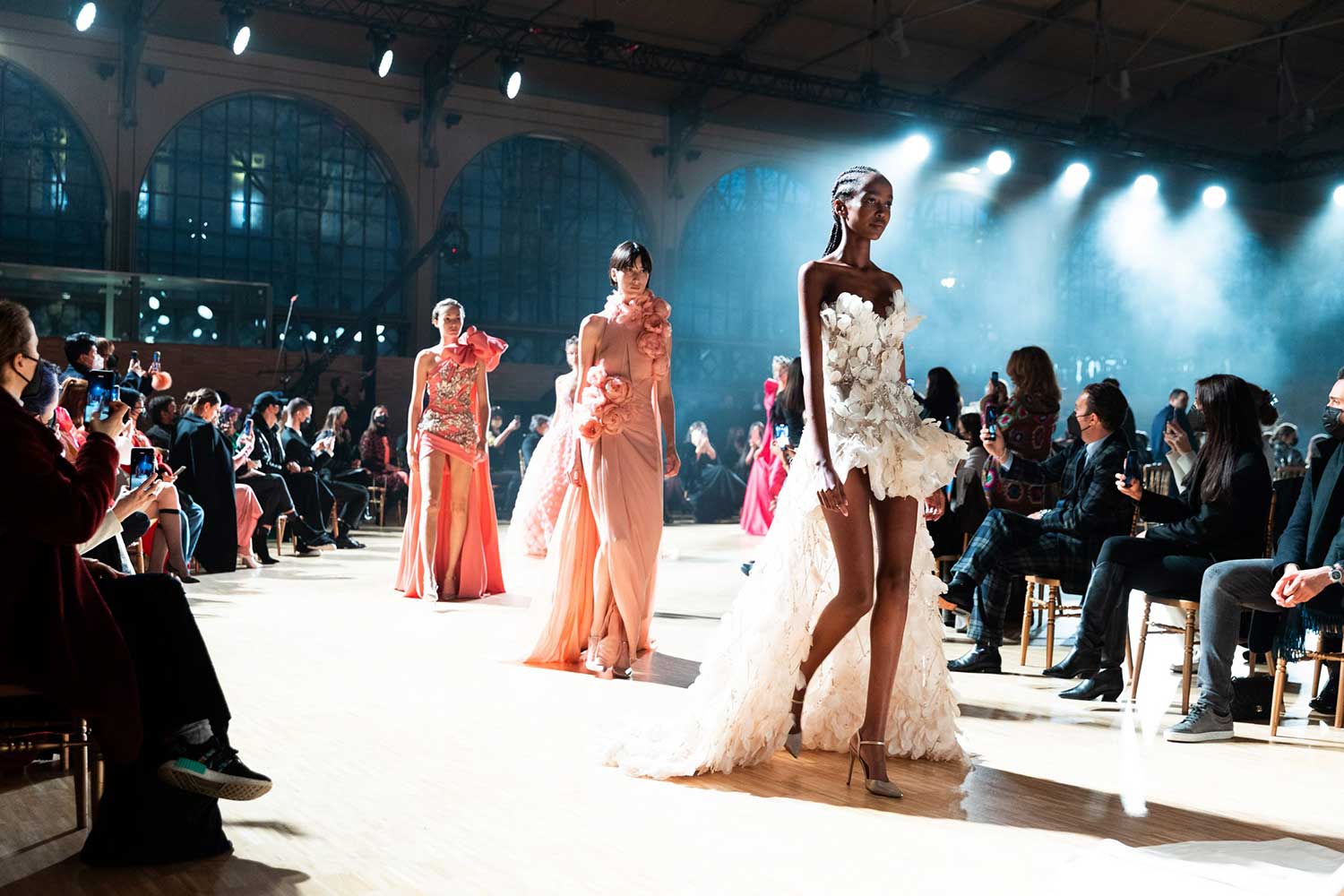
The most common event sponsorship examples are: branded lounges (dwell time between programming), gifting suites and gift bags (product in attendees’ hands), step & repeat placement (your logo in every arrival photo), after-party sponsorship (the most-posted hours of the event), naming rights (the event carries your brand), and product seeding (organic appearances in the event’s content stream). At The Bureau’s fashion weeks in New York, Paris, and Los Angeles, each pattern runs in front of 12,000–15,000+ guests plus millions of digital impressions per event. The strongest examples share one trait: they give the audience something to do, use, or post — not just a logo to look at.
Example 1: The Branded Lounge
What the brand does: designs and hosts a physical space guests use between runway shows — seating, hospitality, product experience, and a set built to be photographed. A beverage brand pours signature drinks; a beauty brand runs touch-up stations; a tech brand demos product in people’s downtime.
What the brand gets: the scarcest commodity in event marketing — dwell time. Guests don’t glance at a lounge; they sit in it for twenty minutes, photograph it, and post it. The lounge is the anchor activation of most official-partner packages because it stacks hospitality, trial, and content generation into one footprint. The test of a great lounge: guests mention it when they describe the event.
Example 2: Gifting Suites & Gift Bags
What the brand does: places product directly into guests’ hands — either curated into the official gift bag or staged in a gifting suite where guests select items themselves. The suite version adds an experience layer: guests remember choosing.
What the brand gets: trial at tastemaker scale. A fashion week audience is disproportionately made of creators, stylists, and early adopters — exactly the people whose unboxing posts and “what I got at fashion week” content outperform paid placements. Gifting is also the most accessible entry point on the sponsorship ladder: a supporting-level placement that regularly out-earns bigger line items when the product is right for the room.
Example 3: Step & Repeat Placement
What the brand does: places its logo on the arrival press wall — the backdrop every guest, celebrity, and creator is photographed against on the way in.
What the brand gets: presence in every arrival photo taken all week — press photography, creator content, and guests’ own posts alike. It’s the compounding activation: the brand doesn’t produce the content, the audience does, and the logo rides along in thousands of frames. Step & repeat placement scales cleanly across levels — supporting sponsors share the wall, title sponsors dominate it.
Example 4: After-Party Sponsorship
What the brand does: integrates into the event’s official evening programming — pouring rights, a branded moment, hosting credit, or full presenting sponsorship of the party itself.
What the brand gets: the loosest, most social, most-posted hours of the week. Show days are scheduled; the after-party is where the room actually mixes — designers, press, creators, and guests in one space with cameras out. Party content also has a different texture than runway content: it reads as lifestyle, not coverage, which is precisely the register most sponsor brands want to live in.
Example 5: Runway & Season Naming Rights
What the brand does: attaches its name to the event itself — a show, a venue space, or the full season. The brand appears wherever the event’s name appears: invitations, signage, press coverage, captions.
What the brand gets: the only activation where the media does part of the work. Every mention of the event — before, during, and after — carries the sponsor, including coverage the brand never produced. Naming rights are title-level inventory and the scarcest example on this page: there’s one per event. The mechanics of the title slot are covered in the packages & levels guide.
Example 6: Product Seeding
What the brand does: places product with specific attendees — creators, stylists, front-row guests — before and during the event, with no obligation attached.
What the brand gets: organic appearances in the week’s content stream. When the right people carry, wear, or use a product at fashion week, it shows up in content that no disclosure hashtag can buy the credibility of. Seeding is the quietest example on this page and often the highest-efficiency one — minimal production, targeted distribution, and results that read as taste rather than advertising.
The Benefits of Event Sponsorship for Brands
Zoom out from the six examples and the benefits of event sponsorship sort into five columns:
| Benefit | What It Means in Practice |
| Concentrated reach | 12,000–15,000+ engaged guests per event, plus millions of digital impressions as the room publishes itself |
| Content engine | Professional and user-generated photography featuring the brand — often a quarter’s worth of social creative from one week |
| Cultural association | The brand positioned inside fashion culture rather than advertising at it |
| Relationship access | Press, creators, stylists, and buyers in one room; hospitality converts sponsorship into relationships |
| Product trial | Gifting and seeding put product in tastemaker hands, with unboxing content as the receipt |
The through-line: an ad interrupts an audience; a sponsorship joins one. Guests chose to be in the room, and well-executed activations get treated as part of the event experience — photographed, posted, and remembered accordingly. The full argument, including who’s actually in a fashion week audience, is in the event sponsorship guide.
What Separates Strong Sponsorships from Logo Placement
Every example above can be executed brilliantly or wasted. The dividing line is consistent:
Weak sponsorships stop at placement. A logo on a banner, a name in a program, a mention from the stage. Placement is visible but inert — nobody photographs a banner, nobody posts a program.
Strong sponsorships give the audience something to do. A lounge worth sitting in. A gift worth unboxing. A wall worth posing against. A party worth staying for. The audience becomes the distribution channel, and the sponsorship generates its own reach instead of renting it.
This is why The Bureau builds packages around activations rather than selling logo menus — and why the fit call asks about your objectives before anything else. If you’re ready to have that conversation, it starts with a short application; if you want the step-by-step first, read how to sponsor an event.
Run One of These at Fashion Week
New York · February 11–14 — Paris · March 4–7 — Los Angeles · March 2027. Lounges, gifting, step & repeat, after-party, naming rights, seeding — tell the partnerships team your category and they’ll show you what’s open.
Apply to Sponsor