

Event Sponsorship
at Fashion Week:
Reach & How It Works
Paris · Oct 2–3
Los Angeles · Oct 16–18
Event sponsorship is a partnership where a brand funds or supports a live event in exchange for visibility, audience access, and activation rights. At The Bureau’s fashion weeks — New York, Paris, and Los Angeles — sponsors reach 12,000–15,000+ in-person guests plus millions of digital impressions per event through runway naming rights, branded lounges, gifting, step & repeat placement, and after-party integrations. Packages are tailored per brand, with category exclusivity available, and the conversation starts with a short application.
What Event Sponsorship Actually Is
Strip the jargon and event sponsorship is a straightforward trade: a brand supports an event; the event puts the brand in front of its audience. The support side can be funding, product, or services. The visibility side is where the craft lives — because “in front of” can mean anything from a logo on a banner to a branded lounge that every guest walks through, photographs, and posts.
The distinction worth learning early: a sponsor is integrated into the event itself — naming rights, activations, hospitality. An exhibitor buys space to show or sell product. Both are legitimate plays with different economics; this page covers sponsorship. (If you’re a brand weighing an on-site retail or showcase presence instead, that’s the exhibit application.)
What separates event sponsorship from buying media is context and concentration. An ad interrupts someone’s feed; a sponsorship meets an audience that chose to be in the room, at a moment of high attention, surrounded by the culture your brand wants adjacency to. That’s why the strongest sponsorships don’t read as advertising at all — they read as part of the event.
Why Fashion Week Is a Different Kind of Room
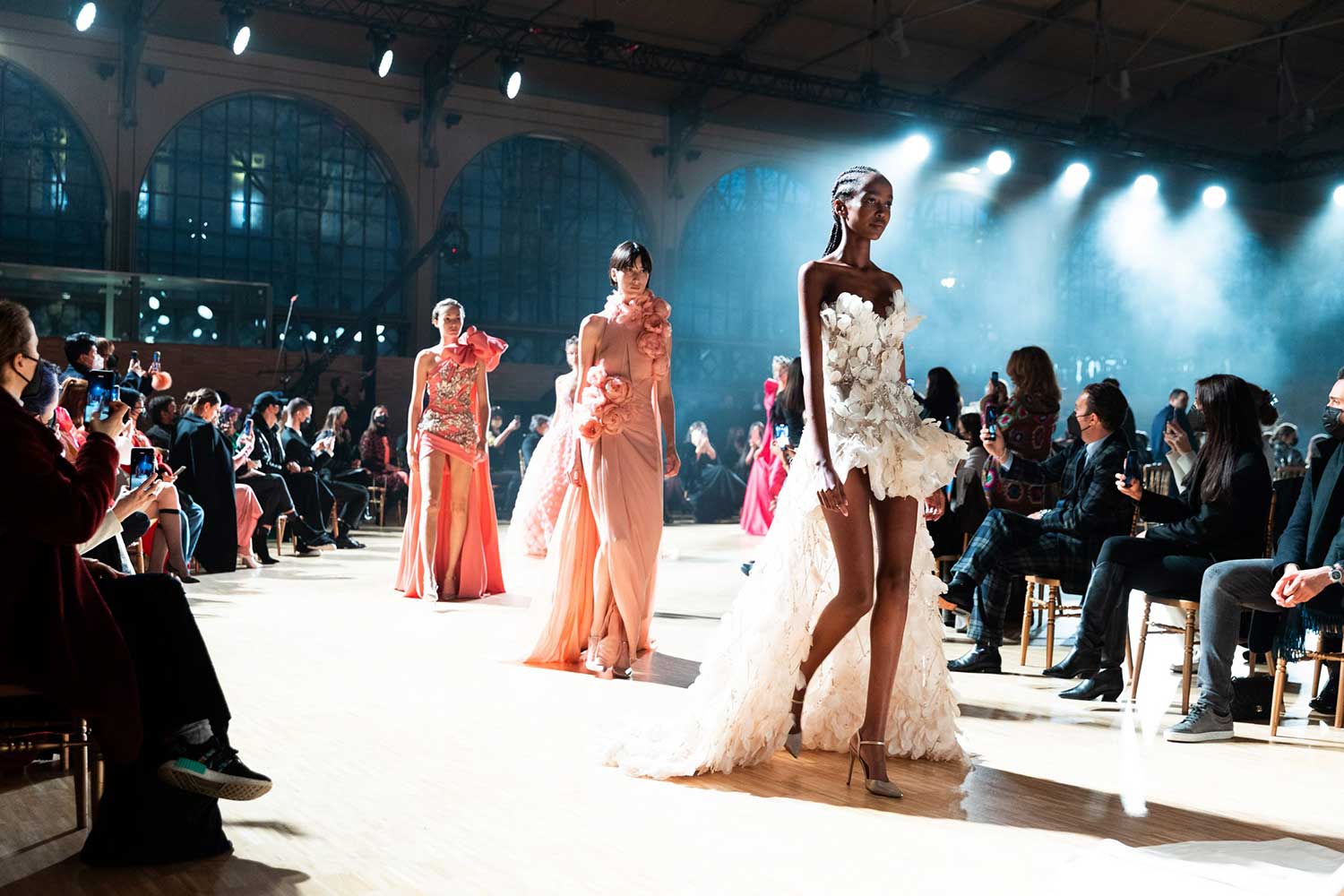
Most sponsorable events rent you attention. Fashion week rents you cultural position. The Bureau Fashion Week produces fashion weeks in three markets — New York (the flagship), Paris, and Los Angeles — hosting hundreds of designers per season, with 12,000–15,000+ in-person guests plus millions of digital reach per event.
Who’s actually in the seats matters more than the count. A Bureau runway audience is self-selected for exactly the qualities sponsors chase: creators who publish the room, press and photographers working the step & repeat, stylists and buyers watching collections professionally, and consumers who paid to be close to fashion culture — the definition of early adopters. Every one of them arrives with a camera and the intent to use it, which is why on-site activations at fashion week convert to digital reach at a rate flat media placements can’t match.
| Event | 2026 Dates | Venue |
| New York Fashion Week (flagship) | September 11–13 | Gotham Hall, New York |
| Paris Fashion Week by The Bureau | October 2–3 | Espace Cléry, 2nd arrondissement, Paris |
| Los Angeles Fashion Week | October 16–18 | The Lot Studios, West Hollywood |
| Each event: 12,000–15,000+ in-person guests · millions of digital impressions · hundreds of designers per season | ||
One note of honesty about the Paris market, because sponsors deserve the same candor we give attendees: The Bureau’s Paris event is its own independently produced fashion week during the Paris Fashion Week season — it is not affiliated with the official FHCM calendar. What sponsors get is a publicly ticketed, professionally produced runway audience in the middle of the most fashion-saturated week on the calendar.
What Fashion Week Sponsorship Can Include
Every package is assembled from the same underlying inventory — the difference between levels is how much of it you hold and how prominently. The core activation types:
| Activation | What It Is | What It Does for the Brand |
| Runway naming rights | Your brand on the show or the season itself | Top-of-hierarchy association with every mention of the event |
| Branded lounge | A designed space guests use between shows | Dwell time, hospitality, and a photogenic branded environment |
| Step & repeat | Logo placement on the arrival press wall | Your mark in every arrival photo, from press and guests alike |
| After-party sponsorship | Integration into the official evening event | The loosest, most social, most-posted hours of the week |
| Gift bags & gifting suites | Product placed directly in guests’ hands | Trial and unboxing content from a tastemaker audience |
| Product seeding | Targeted placement with attendees and talent | Organic appearances in the week’s content stream |
| Experiential activation | A custom on-site brand moment | The activations people remember the event by |
The full tier-by-tier breakdown — what a title sponsor holds versus a supporting sponsor, and how levels are structured — lives in the sponsorship packages & levels guide. For what brands actually do with this inventory, the event sponsorship examples page walks through real activation patterns.
Corporate Sponsorship: One Event vs. a Program
A single-event sponsorship is a campaign. Corporate sponsorship is a position — a company-level partnership that usually spans markets or seasons, held in one agreement. With three markets running September and October 2026, The Bureau’s calendar makes the program play unusually clean: a brand can activate New York, Paris, and Los Angeles inside six weeks, with consistent creative and one partnerships team.
Two things scale when sponsorship goes corporate. The first is obvious: reach, multiplied across rooms. The second is the one experienced sponsors actually negotiate for — category exclusivity. One sponsor per category means your competitor isn’t pouring at the lounge next to yours; held across all three markets, it means your category’s fashion week presence is you. Exclusivity is one of the main levers that shapes a package’s scope, alongside markets and activation footprint.
Multi-market programs also fix the quiet inefficiency of one-off event marketing: the production learning curve. The lounge design, the gifting logistics, the content capture plan — built once, amortized across three cities.
How Sponsoring a Bureau Event Works
The process is deliberately short — four steps between first contact and a signed package:
1. Apply. The sponsorship application takes a few minutes: who you are, your category, what you’re trying to accomplish.
2. Fit call. The partnerships team reviews your category and objectives, then walks you through open inventory, levels, and markets on a short call. This is also where exclusivity availability in your category gets answered.
3. Tailored package. No off-the-shelf tiers with your logo pasted in — the team assembles activations, markets, and deliverables around your objectives, and that composition is what sets the investment. (This is also why we don’t publish pricing: the honest answer depends on what we build together.)
4. Production. Once signed, you work with the production team on creative, fabrication, logistics, and the content plan through show days.
The full buyer-side playbook — including timelines and the questions worth asking any event, not just ours — is in how to sponsor an event. On lead time: strong activations need production runway, so 2–4 months out is the comfortable window; simpler placements can move faster.
What Sponsors Actually Take Home
Event sponsorship returns arrive on four ledgers, and disciplined sponsors track all of them:
Reach. In-person impressions from 12,000–15,000+ guests per event, plus the digital multiple — millions of impressions per event as the room publishes itself across the week.
Content. A fashion week activation is a content engine: professional photography against your step & repeat, creator posts from your lounge, unboxing moments from gifting. Brands routinely fuel a quarter of social creative from one week on site.
Association. The un-spreadsheetable one, and often the reason the sponsorship happened: your brand positioned inside fashion culture rather than advertising at it. This is what naming rights and exclusivity actually purchase.
Relationships. The room is full of people brands otherwise pay agencies to reach — creators, press, stylists, buyers. Hospitality inventory (lounge invitations, front-row seats for clients, after-party access) converts sponsorship into relationship-building at a pace cold outreach never matches.
What a package’s deliverables look like level by level — and how the four ledgers scale with each — is covered in the packages guide.
Put Your Brand in the Room
New York · September 11–13 — Paris · October 2–3 — Los Angeles · October 16–18. Tailored packages, category exclusivity available, one partnerships team across all three markets. The conversation starts with a short application.
Apply to Sponsor