

Perform
at Fashion
Week
Paris Fashion Week — March & October
LA Fashion Week — October 16–18, 2026
To perform at fashion week, you apply directly to the production. The Bureau books performers — DJs, live vocalists and musicians, dancers, movement artists, and performance models — across its three fashion weeks: New York Fashion Week (September 11–13, 2026), Paris Fashion Week (March & October), and Los Angeles Fashion Week (March & October — next season October 16–18, 2026). No agent or referral required — submit the application below with a link to your work, the booking team personally reviews every submission, and if there’s a fit for an upcoming season you’ll typically hear back within 1–2 weeks.
The Runway Runs on Performers
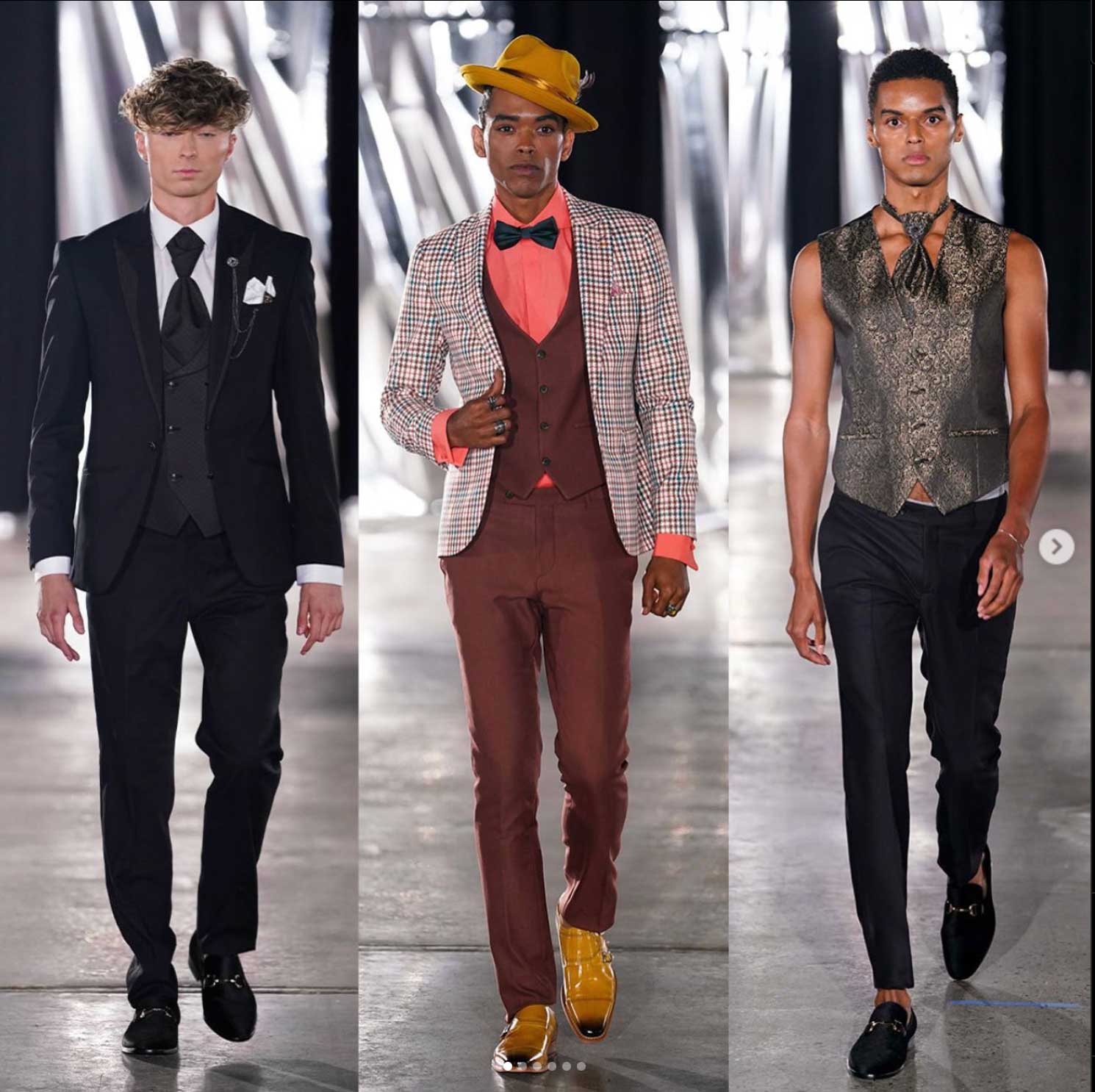
A fashion week show is closer to a live performance than a product presentation. The soundtrack is the show’s heartbeat, an opening moment sets the room before a single look walks, and the after party is a full evening of programming in its own right. Models carry the clothes — performers carry the room.
Most performers assume fashion week bookings happen through agencies, personal connections, or closed industry channels. At The Bureau, they don’t have to. We produce fashion weeks in three global markets — New York, Paris, and Los Angeles — with hundreds of designers showing per season and events drawing 12,000–15,000+ people in person plus millions in digital reach. That volume of programming needs a steady pipeline of talent, and this page is the front door to it: one application, personally reviewed, no agent required.
If you’re here for the short answer: skip to the application. If you want to know what we book, how selection works, and what a slot actually looks like, the next five sections cover it.
What Performers Do at Bureau Fashion Weeks
Performer bookings at a Bureau season fall into a few recurring shapes:
| Runway soundtracks | DJs and live musicians scoring designer showcases — the music a room of thousands associates with a collection. Some designers arrive with a soundtrack vision; many rely on the production’s roster. |
| Opening & featured moments | Live vocal performances, choreographed movement pieces, and dance features that open a show or land inside one — the moments audiences film first. |
| Pre-show & door sets | The room fills over 30–45 minutes before each show. DJs and live acts own that window — less spotlight, real crowd, consistent work across a season’s full show slate. |
| After-party programming | Headline territory. The Rose Ball — NYFW’s after party, September 11, 2026 — is an entire evening built on its performers, and each market’s season carries its own event programming around the shows. |
| Performance modeling | Runway work that crosses into performance — movement-led walks, character work, and pieces where the designer wants an artist, not just a fitting. |
One application covers all of these — you tell us what you do, and the booking team matches you to the slots where it fits.
Who We Book
Broadly: if it performs live, we book it. Specifically:
DJs
Runway soundtracks, pre-show sets, and after-party slots including the Rose Ball. The application asks for a mix or recorded set — recent and representative beats long and polished. Range matters: a fashion week season needs editorial restraint at 2 PM and a full dance floor at midnight.
Live Vocalists & Musicians
Singers, instrumentalists, and producers who perform live — show openers, featured moments inside designer showcases, and event sets. Live vocal ability on camera is the core of the application; genre is open.
Bands & Ensembles
Full acts for after parties and event programming, plus stripped configurations for show moments. Note your lineup size and technical needs in the application — staging is part of the fit conversation.
Dancers
Soloists, companies, and crews — runway show openings, choreographed features inside showcases, and event performances. Style is open: contemporary, ballet, hip-hop, ballroom, cultural forms. Live movement on camera is what the review looks for.
Movement Artists
Choreographers, physical performers, and artists whose work lives between dance and installation — the category behind a show’s most-filmed moments. If your work defies the other labels, it belongs here.
Performance Models
Models whose runway work is a performance — movement-led walks, character-driven presentation, and pieces where a designer needs an artist on the runway. Distinct from standard model casting; this is a performance application.
Not on the list but perform live? Apply anyway and pick Other — the category exists because the most interesting applications don’t fit the grid.
Three Fashion Weeks, One Application
The Bureau produces fashion weeks in three global markets, each running season by season:
| New York Fashion Week | September 11–13, 2026 — the flagship season, at Gotham Hall in Midtown Manhattan, with the Rose Ball after party on September 11. The densest performer slate of the year: three days of shows plus a headline evening event. |
| Paris Fashion Week | March & October — two seasons per year in the industry’s capital city. International applications welcome; note your base city in the form so the team can plan around it. |
| Los Angeles Fashion Week | March & October — next season October 16–18, 2026. Two seasons per year on the West Coast, with a heavy creator and entertainment-industry audience in the room. |
You’ll pick a specific market and season in the application — and if the booking team sees a fit for you in another market, they’ll reach out directly. Curious what the events themselves are like? Start with what fashion week actually is and the NYFW hub. And if your craft is backstage rather than on stage, The Bureau also books hair and makeup artists for the same seasons.
How Selection Works
The process is deliberately simple:
| 1. Apply | Submit the form below — who you are, what you perform, which market, and a link to your work. Five minutes, free, no agent required. |
| 2. Review | The booking team personally reviews every submission — there’s no algorithmic filter. What carries the review: a recent, honest reel; a live social presence; and a clear sense of what you’d bring to a room. |
| 3. Hear back | If there’s a fit for an upcoming season, you’ll typically hear back within 1–2 weeks. Booking runs season by season — a strong application that misses the current season is kept in view for the next one. |
| 4. Book | Slot, logistics, and compensation are discussed individually — a DJ holding a full evening and a movement artist opening one show are different engagements, so terms are set case-by-case after review. |
What doesn’t matter: follower count thresholds, formal training pedigrees, or having played a fashion week before. Roughly none of the best fashion week performances came from the most-credentialed application in the pile.
What Performing at Fashion Week Gets You
A fashion week slot is a different asset than a club night or a showcase gig:
The room. Bureau events draw 12,000–15,000+ people in person per event — and it’s a specific crowd: designers, press, buyers, creators, and an audience that came to watch culture get made. These are rooms where being seen compounds.
The reach. Fashion week is one of the most-documented event formats on earth. Bureau seasons generate millions in digital reach — and performers sit inside the most-filmed moments of it. The content that comes out of a runway slot is portfolio material you can’t stage on your own.
The proximity. Hundreds of designers show per season, each one a brand that books campaigns, shows, and events year-round. Performing at fashion week puts you in professional rooms with the people who hire performers — repeatedly, per season, in three markets.
The credit. “Performed at New York Fashion Week” is a line that changes how the next booking conversation starts. It’s verifiable, it’s specific, and it travels across every genre and scene.
Apply to Perform
Tell us what you do and where you want to do it. Required fields are marked — everything else helps the review, especially a link to your work. The booking team personally reviews every submission; if there’s a fit, you’ll typically hear back within 1–2 weeks.
Application Received
Our booking team personally reviews every submission. If there’s a fit for an upcoming season, you’ll typically hear back within 1–2 weeks. Keep an eye on your inbox and your phone.