

Brand Activations
at Fashion Week:
Every Way In
Paris · Oct 2–3
Los Angeles · Oct 16–18
A brand activation is a live, participatory brand experience — something an audience walks into, tries, tastes, photographs, or takes home, rather than an ad they scroll past. Fashion week is the highest-leverage room to run one in: The Bureau’s events in New York, Paris, and Los Angeles each put activations in front of 12,000–15,000+ in-person guests plus millions of digital impressions per event. Brands participate four ways — sponsorship, exhibiting, gifting & product seeding, or a custom experiential build — and none of them require showing a collection. The conversation starts with a short application.
What a Brand Activation Actually Is
A brand activation is a live experience designed to make an audience interact with a brand instead of just seeing it. The word “activation” is doing real work in that sentence: advertising builds awareness that sits dormant; an activation switches it on by giving people something to do — a lounge to sit in, a product to try, a moment to film.
In marketing terms, activation is the bridge discipline. It sits between the ad (which creates familiarity) and the purchase (which cashes it in). Launches, sampling, pop-ups, live events, experiential builds — all of it is activation, and all of it shares one test: did the audience participate, or did they just witness?
There are two ways to stage one. A brand can host its own brand activation event — rent the venue, build the audience, carry the production risk — or it can activate inside a larger cultural event where the audience, press, and energy are already assembled. Fashion week is the second kind, and it’s the reason this page exists: the hardest, most expensive parts of an activation — the room and the reasons to photograph it — come with the venue.
Why Fashion Week Is the Room Activations Want
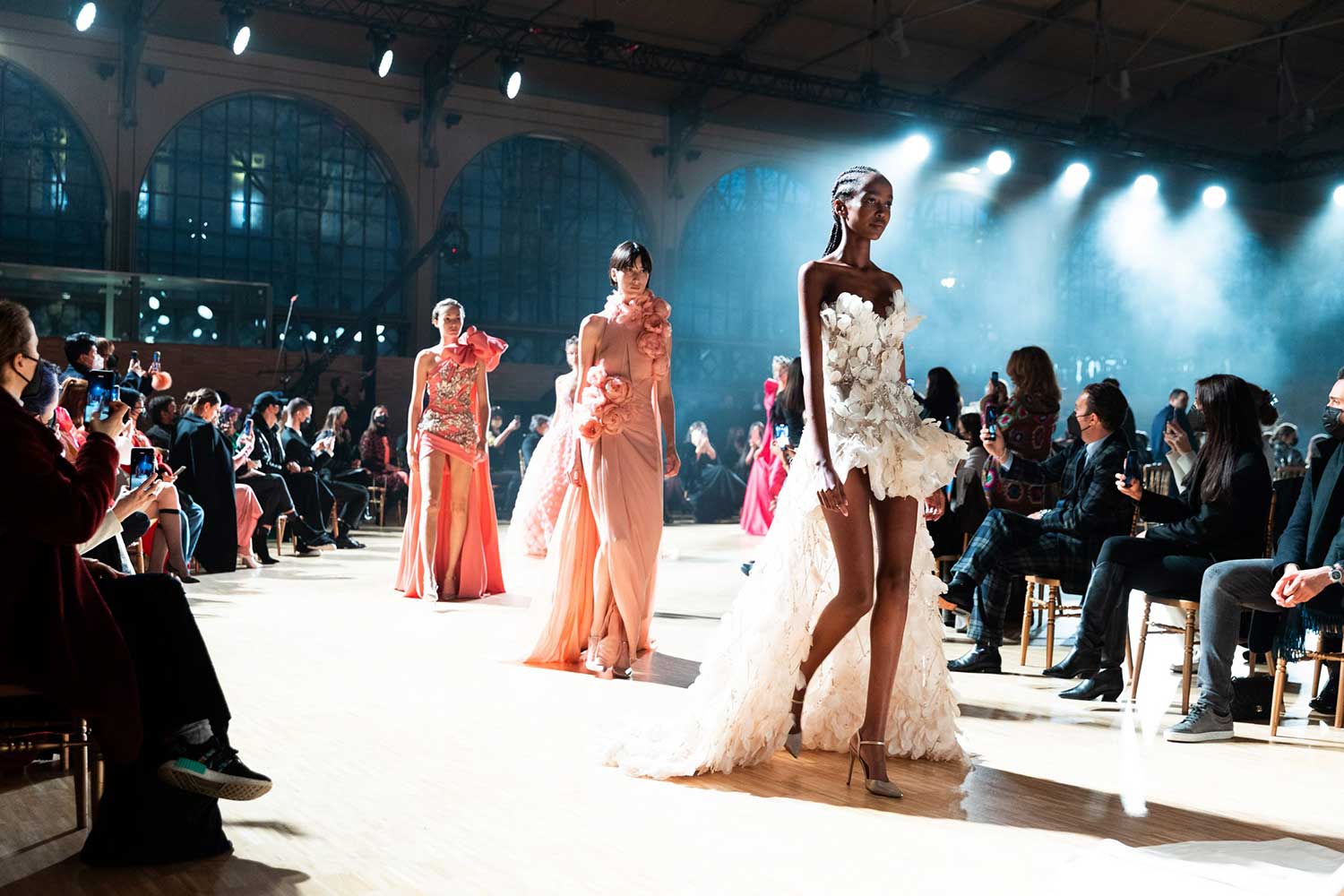
Most activation venues rent you foot traffic. Fashion week rents you cultural position. The Bureau Fashion Week produces fashion weeks in New York (the flagship), Paris, and Los Angeles, hosting hundreds of designers per season, with 12,000–15,000+ in-person guests plus millions of digital impressions per event.
The composition of the room is the point. A Bureau audience is self-selected for exactly what activations need: creators who publish everything they walk through, press and photographers working arrivals, stylists and buyers reading the season professionally, and consumers who paid to be close to fashion culture — the textbook definition of early adopters. Every guest arrives with a camera and the intent to use it, which is why an on-site activation here converts to digital reach at a rate a mall pop-up or conference booth can’t approach.
| Event | 2026 Dates | Venue |
| New York Fashion Week (flagship) | September 11–13 | Gotham Hall, New York |
| Paris Fashion Week by The Bureau | October 2–3 | Espace Cléry, 2nd arrondissement, Paris |
| Los Angeles Fashion Week | October 16–18 | The Lot Studios, West Hollywood |
| Each event: 12,000–15,000+ in-person guests · millions of digital impressions · hundreds of designers per season | ||
One note of candor on Paris, because partners deserve the same honesty we give attendees: The Bureau’s Paris event is its own independently produced fashion week during the Paris Fashion Week season — not affiliated with the official FHCM calendar. What brands get is a publicly ticketed, professionally produced audience in the middle of the most fashion-saturated week on earth.
How Brands Participate — Pick Your Mode
“Getting your brand into fashion week” means four different things depending on your product and objective. Here’s the honest map — each mode routes to a different door:
| Mode | Best For | What It Looks Like | Where It Starts |
| Sponsorship | Brands buying association, reach, and hospitality | Branded lounges, naming rights, step & repeat, after-party integration | Sponsorship application |
| Exhibiting | Brands that want to show or sell product on site | A branded space in the venue with direct guest traffic | Exhibit application |
| Gifting & product seeding | Product brands chasing trial and UGC | Gift bags, gifting suites, targeted placement with talent and creators | Gifting & seeding guide |
| Experiential build | Brands with a moment worth constructing | A custom on-site activation designed with the production team | Experiential guide |
And the fifth door, for completeness: if you’re a fashion label wanting to show a collection on the runway, that’s not an activation — that’s the designer program, and it has its own application. Everything on this page is for brands participating around the runway, not on it.
Not sure which mode fits? That’s normal — most strong programs blend two or three (a gifting suite inside a sponsored lounge; an exhibit space plus after-party pour). Apply through the partnerships application and the team will route you in one call.
Brand Partnerships: One Activation vs. a Position
A single activation is a campaign. A brand partnership is a position — a company-level relationship with the event, usually spanning markets or seasons, held in one agreement. The distinction matters because the returns compound differently: a one-off activation buys a spike of reach and content; a partnership makes the brand part of how the event is remembered.
The Bureau’s 2026 calendar makes the partnership play unusually efficient: New York, Paris, and Los Angeles run inside six weeks (September 11 – October 18), so a partner can execute a three-market program with one creative system, one partnerships team, and one production learning curve amortized across three cities.
The lever experienced partners negotiate hardest for is category exclusivity — one brand per category. Held across all three markets, exclusivity means your category’s fashion week presence is you, and your competitor watches from the audience. It’s one of the main drivers of a package’s scope, alongside markets and activation footprint. The tier mechanics — what a title partner holds versus a supporting sponsor — are covered in the sponsorship packages & levels guide.
How to Plan a Brand Activation (That Earns Its Budget)
Whether it runs at fashion week or anywhere else, activation planning is five decisions in order:
1. Objective before format. Awareness, trial, content, or relationships — pick the primary. The format follows: awareness wants placement and naming, trial wants gifting and sampling, content wants a photogenic build, relationships want hospitality.
2. Pick the room. The audience you borrow matters more than the structure you build. A modest activation in front of 12,000–15,000 tastemakers outperforms an elaborate one in a room nobody influential walks through.
3. Design the interaction. The activation test again: what does a guest do? Sit, taste, try on, unbox, photograph? If the answer is “look at it,” you’ve designed a billboard. Steal formats from the activation ideas list.
4. Plan the capture. The on-site audience is the seed; the content is the harvest. Decide before build-out what photos, video, and UGC the activation should produce, and design the set for them.
5. Staff the follow-up. Leads, creator contacts, press interest — the week after the event is where activation ROI is either collected or forfeited.
Running it at a Bureau event deletes most of steps 2 and 4 from your risk column: the room is assembled, the press is credentialed, and the production team builds alongside you. To implement a full activation strategy rather than a one-off, run the same format across the three-market season — that’s the program play from section 04.
What a Fashion Week Activation Returns
Four ledgers, same as any serious event investment — but fashion week weights them differently than other venues:
Reach. 12,000–15,000+ in-person guests per event, multiplied by the digital layer — millions of impressions per event as the room publishes itself all week.
Content. This is fashion week’s outsized ledger. Professional photography, creator posts, unboxing moments, arrival shots against your placement — brands routinely fuel a quarter’s social creative from one week on site.
Association. The reason brands choose fashion week over a trade floor: positioning inside fashion culture rather than advertising at it. Naming rights and exclusivity are how this ledger scales.
Relationships. The room holds the people brands otherwise pay agencies to reach — creators, press, stylists, buyers. Hospitality converts activation budget into relationship-building at a pace cold outreach never touches.
For the deeper treatment of each mode: event sponsorship for the association-and-reach play, product seeding & gifting for trial and UGC, and experiential marketing for the custom-build path.
Put Your Brand in the Room
New York · September 11–13 — Paris · October 2–3 — Los Angeles · October 16–18. Sponsorship, exhibiting, gifting, or a custom build — one application starts the conversation, and the partnerships team routes you to the right mode.
Apply to Partner