

Experiential Marketing
Examples: What Works
at Live Events
Paris · Oct 2–3
Los Angeles · Oct 16–18
Experiential marketing is marketing the audience participates in instead of watching — and the strongest experiential marketing examples share one mechanic: the brand builds an experience, the audience turns it into content. The six patterns that consistently work at live events: immersive brand environments (dwell time inside a designed world), live service stations (styling, monogramming, espresso — usefulness as branding), multi-sensory sampling (taste and touch beat impressions), creator content studios (give publishers a set), limited drops (scarcity people line up for), and after-hours takeovers (the most-posted hours of any event). At The Bureau’s fashion weeks in New York, Paris, and Los Angeles, each runs in front of 12,000–15,000+ guests plus millions of digital impressions per event.
What Experiential Marketing Actually Is
Experiential marketing is marketing an audience participates in rather than watches. Instead of producing an ad about the product, the brand stages an experience of it — a space to enter, a service to use, a taste to try, a moment to film. The experience is the message; the audience’s photos and posts are the media plan.
That definition carries a hard requirement most experiential campaigns fail: you need an audience worth building for. A brilliant installation in an empty room is a set, not a campaign. This is why the venue question matters more than the creative question — and why brands increasingly run experiential inside existing cultural events rather than building standalone pop-ups that have to buy their own foot traffic.
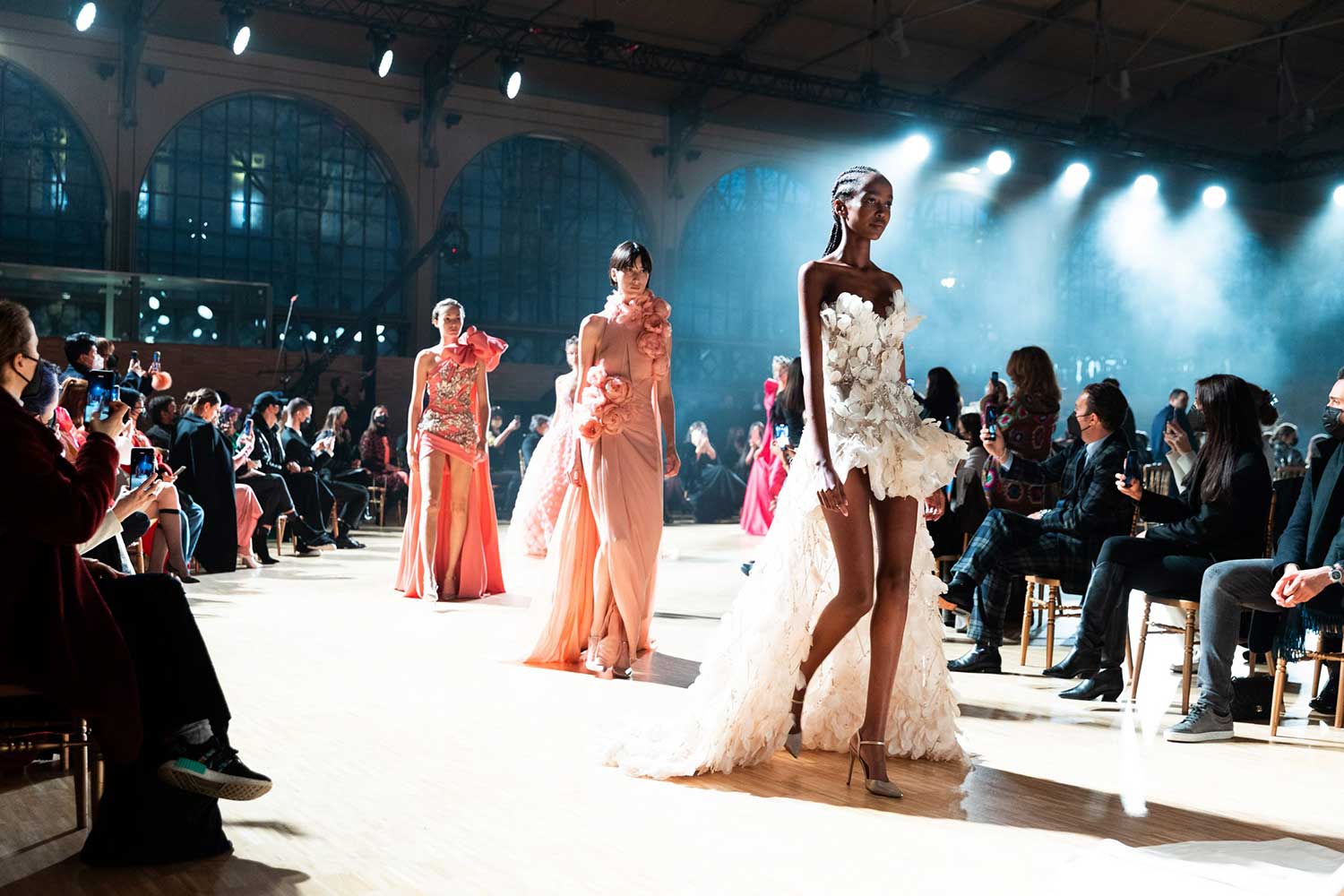
Fashion week is the extreme case of an inherited audience: 12,000–15,000+ guests per event, disproportionately creators, stylists, press, and early adopters — a room that documents everything it touches. The six examples below are the patterns that consistently convert that room into brand reach. (For where experiential sits among the other ways into fashion week — sponsorship, exhibiting, gifting — start with the brand activation guide.)
Example 1: The Immersive Brand Environment
What the brand builds: a fully designed physical world guests step into — a lounge, a set, a themed room where every surface, scent, and object expresses the brand. Not a booth with a backdrop; an environment with a point of view.
What the audience does: dwells. Guests spend the gaps between runway shows inside the space — sitting, drinking, photographing, posting. Dwell time is the scarcest commodity in event marketing, and a well-built environment captures twenty minutes of it per guest.
What the brand gets back: the environment appears in hundreds of guest posts as the place to be at the event — lifestyle content no studio shoot replicates, because the context is real. This is the anchor pattern of most official-partner packages.
Example 2: The Live Service Station
What the brand builds: a station that does something for guests, live — a beauty brand running touch-ups before the shows, a leather-goods brand monogramming on site, a coffee brand pulling espresso, a stylist bar taping hems and pinning looks.
What the audience does: uses it — then credits it. At an event where everyone is about to be photographed, a service that makes guests look or feel better isn’t a gimmick; it’s genuinely wanted. Usefulness converts to gratitude, and gratitude converts to mentions.
What the brand gets back: product demonstration disguised as hospitality. Every touch-up is a trial; every monogram is a keepsake that carries the logo home. Service stations also generate a distinct content genre — before/after, get-ready-with-me — that performs natively on social.
Example 3: Multi-Sensory Sampling
What the brand builds: a tasting or trial moment engineered as an experience — a signature pour, a fragrance bar, a snack styled to be photographed before it’s eaten. The difference from handing out samples in a parking lot is staging: the product arrives inside a designed moment.
What the audience does: tries the product with all senses engaged, in a mood the brand controls — then associates the taste or scent with the best night of their season.
What the brand gets back: trial plus memory encoding. Sampling at a culturally charged event imprints differently than sampling at a grocery endcap; the context does half the positioning work. It’s also among the most affordable experiential formats — a supporting-level placement that regularly out-earns bigger line items when the product fits the room.
Example 4: The Creator Content Studio
What the brand builds: a set — proper lighting, a designed backdrop, sometimes a photographer or a 360 camera — where guests and creators shoot content with the brand’s world built in.
What the audience does: exactly what they came to do. A fashion week crowd is full of people whose job is publishing; a content studio removes every friction between them and a post. Nobody has to be persuaded to use it.
What the brand gets back: a guaranteed content engine. Most experiential formats hope for organic posts; a studio manufactures them — on-brand, well-lit, and tagged, often hundreds per event. For brands whose KPI is social output per dollar, this is usually the highest-ratio pattern on the page.
Example 5: The Limited Drop
What the brand builds: a product moment exclusive to the event — a colorway, a collaboration, a numbered edition available only on site, only that weekend.
What the audience does: lines up — and posts about lining up. Scarcity plus a hard time limit turns acquisition into an event of its own. The unboxing continues the story for days afterward.
What the brand gets back: urgency, earned coverage, and a sales signal in one move. Drops are the rare experiential format with a direct revenue line attached, and “only at fashion week” framing borrows the event’s cultural weight for the product itself.
Example 6: The After-Hours Takeover
What the brand builds: presence inside the event’s evening programming — pouring rights, a branded room, hosting credit, or presenting sponsorship of the after-party itself.
What the audience does: relaxes, mixes, and films. Show days run on a schedule; the party is where designers, press, creators, and guests actually collide — cameras out, guard down.
What the brand gets back: the most-posted hours of the entire event, in a content register — lifestyle, nightlife, celebration — that most brands want to live in and can’t credibly manufacture. After-hours inventory is scarce and moves early; mechanics are covered in the packages & levels guide.
How Brands Measure Experiential Results
Experiential has a reputation for being unmeasurable. In practice, mature brands track it across four ledgers:
| Ledger | What Gets Counted |
| Participation | Guests who entered, used, tasted, or shot inside the experience — the experiential equivalent of clicks |
| Content | Photos, videos, and creator posts the experience generated — often a quarter’s worth of social creative from one week |
| Reach | In-person impressions plus the digital reach of that content as the room publishes itself |
| Relationships | Press, creator, stylist, and client contacts made inside the experience — hospitality converting to pipeline |
The discipline that separates strong programs from expensive ones: design backward from the content. Decide what the posts should look like, then build the experience that produces them. Every example above survives that test; most trade-show booths don’t.
If you’re weighing experiential against the other routes into fashion week — straight sponsorship, exhibiting, product seeding — the brand activation guide maps all four, and the activation ideas list ranks twelve formats by effort and return. Ready to ask what’s open in your category? It starts with a short application.
Build the Experience at Fashion Week
New York · February 11–14 — Paris · March 4–7 — Los Angeles · March 2027. Environments, services, sampling, studios, drops, after-hours — tell the partnerships team your category and objectives and they’ll show you what’s open.
Apply to Partner