

12 Brand Activation
Ideas That Actually
Earn Their Budget
Paris · Oct 2–3
Los Angeles · Oct 16–18
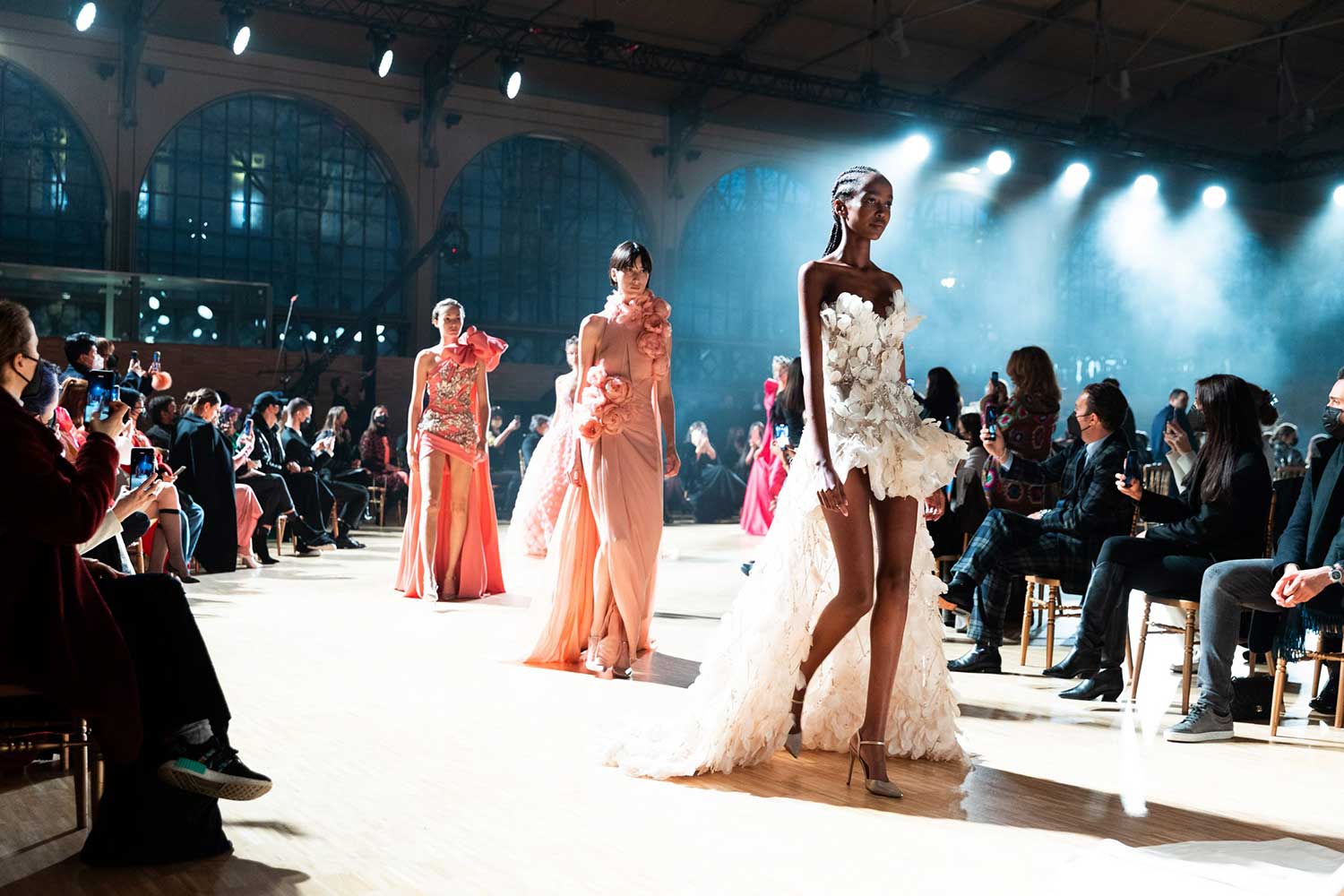
The brand activation ideas that consistently work: branded lounges, gifting suites, sampling bars, designed photo moments, after-party takeovers, gift bag inclusion, product seeding, live service stations, step & repeat placement, creator content studios, limited on-site drops, and naming rights. Every one shares the same mechanic — it gives the audience something to do, use, or post, not just look at. At The Bureau’s fashion weeks in New York, Paris, and Los Angeles, each format runs in front of 12,000–15,000+ guests plus millions of digital impressions per event.
One Test Separates Ideas That Work From Ideas That Decorate
Before the list, the filter that produced it. Most event activation ideas die the same death: the brand builds something for the audience to look at, the audience looks, and nothing else happens. The activations that earn their budget all pass a single test: a guest does something — sits, tastes, tries, takes, films — and that doing produces content on its own.
Every idea below passes it. They’re ordered roughly by weight: light placements first, full builds last. Effort ratings are honest — a lounge is a production project; gift bag inclusion is a shipping label.
The Light Lifts: Product Does the Work
1. Gift bag inclusion. Your product in the official bag handed to guests. Lightest possible entry: product cost plus logistics. Returns trial at scale and unboxing content from a tastemaker audience. The classic first-season play.
2. Product seeding with talent. Targeted placement with creators, stylists, and notable attendees — before or during the event — so your product appears organically in the week’s content stream. High precision, low footprint. The full mechanics live in the product seeding & gifting guide.
3. Step & repeat placement. Your logo on the arrival press wall — in every arrival photo shot by press and guests alike, syndicated wherever the coverage goes. Zero build, pure placement, and one of the few “look at it” formats that works, because the wall is inside the content everyone makes anyway.
4. Sampling or tasting bar. Beverage pours, bites, fragrance testing, skincare minis. Trial plus dwell time plus the social proof of a queue. Works hardest for consumables and beauty, where the product experience is the pitch.
The Mid-Weights: Built for the Camera
5. Designed photo moment. A set piece built to be photographed — floral installation, sculptural logo, mirror room, branded backdrop that isn’t a press wall. The mechanic is vanity in the kindest sense: guests want good photos of themselves; your brand supplies the set. Design for the phone camera, not the eye.
6. Live service station. Braid bar, espresso cart, on-site engraving or embroidery, ten-minute manicures. Service formats create the two things placements can’t: a queue (visible demand) and gratitude (a guest who received something remembers who gave it).
7. Creator content studio. A lit, dressed corner built specifically for creators to shoot in — seamless backdrops, good light, your product in frame. You’re not asking creators to feature the brand; you’re solving their actual problem (they need content from the event) with your brand attached.
8. Limited drop or on-site exclusive. A product, colorway, or bundle that exists only at the event. Scarcity converts foot traffic into urgency and gives creators a story (“only available at fashion week”), not just a product shot. Pairs naturally with an exhibit space if you’re selling on site.
The Full Builds: Own a Piece of the Event
9. Branded lounge. The anchor format. A designed space guests use between shows — hospitality, product experience, and a photogenic environment in one. Lounges buy the scarcest commodity at any event: dwell time. Guests spend twenty unhurried minutes inside your brand, and post from it.
10. Gifting suite. The lounge’s commerce-minded sibling: an appointed space where selected guests — creators, press, VIPs — are walked through products and gifted. Higher touch than a gift bag, dramatically higher content yield per unit, and the format that builds talent relationships fastest.
11. After-party takeover. Integration into the official evening event — the pour, the photo moment, the room itself. The after-party is the loosest, most social, most-posted stretch of the entire week; brands that own a piece of it show up in the night’s entire content stream.
12. Naming rights. The ceiling of the list: your brand on the show, the stage, or the season. Every mention of the event carries your name — press, tickets, signage, recaps. This is an association play rather than an interaction play, and it’s how title-level sponsorship packages are anchored.
| Idea | Effort | Primary Return |
| Gift bag inclusion | Light | Trial at scale, unboxing content |
| Product seeding | Light | Organic talent content |
| Step & repeat | Light | Logo in all arrival coverage |
| Sampling / tasting bar | Mid | Trial, dwell, visible demand |
| Photo moment | Mid | Guest-generated content |
| Live service station | Mid | Queue + gratitude + content |
| Creator content studio | Mid | Creator posts with product in frame |
| Limited on-site drop | Mid | Urgency, sales, story |
| Branded lounge | Full build | Dwell time + hospitality + content |
| Gifting suite | Full build | Talent relationships, high-yield content |
| After-party takeover | Full build | The most-posted hours of the week |
| Naming rights | Program | Top-of-hierarchy association |
The Strongest Programs Stack Two or Three
These aren’t twelve competing choices — they’re a menu, and experienced brands order more than one. The proven stacks: a gifting suite inside a branded lounge (dwell time feeds the gifting appointments), seeding before + step & repeat during (talent arrives already wearing you, then gets photographed against your wall), sampling bar + after-party pour (daytime trial, nighttime social proof).
Stacking is also how the budget conversation actually goes: packages at The Bureau are assembled from this inventory around your category and objective, not sold off a rate card — which is why the honest answer on cost is always “it depends what we build.” Category exclusivity — one brand per category — shapes scope more than any single format. For where these ideas sit inside the bigger participation picture, start at the fashion week for brands guide; for the experience-design theory behind them, the experiential marketing examples page goes deeper.
Run One in a Room That’s Already Full
New York · September 11–13 — Paris · October 2–3 — Los Angeles · October 16–18. Bring a format from this list or just an objective — the partnerships team maps it to real inventory in one call.
Apply to Partner