

Exhibit at
Fashion Week: A Trade
Show With a Pulse
Paris · Oct 2–3
Los Angeles · Oct 16–18
Exhibiting at fashion week means securing a physical brand space — a booth, table, or activation footprint — inside a live fashion week venue, in the flow of its guests. It solves the problem that sinks most fashion trade show booths and standalone pop-ups alike: buying an audience. At The Bureau’s fashion weeks in New York, Paris, and Los Angeles, the audience is built in — 12,000–15,000+ guests per event plus millions of digital impressions, skewed toward creators, stylists, press, and early adopters. Exhibitors range well beyond fashion labels: beauty, fragrance, jewelry, spirits, wellness, tech, and lifestyle retail. Entry is a short exhibit application; the partnerships team responds with placements and package options.
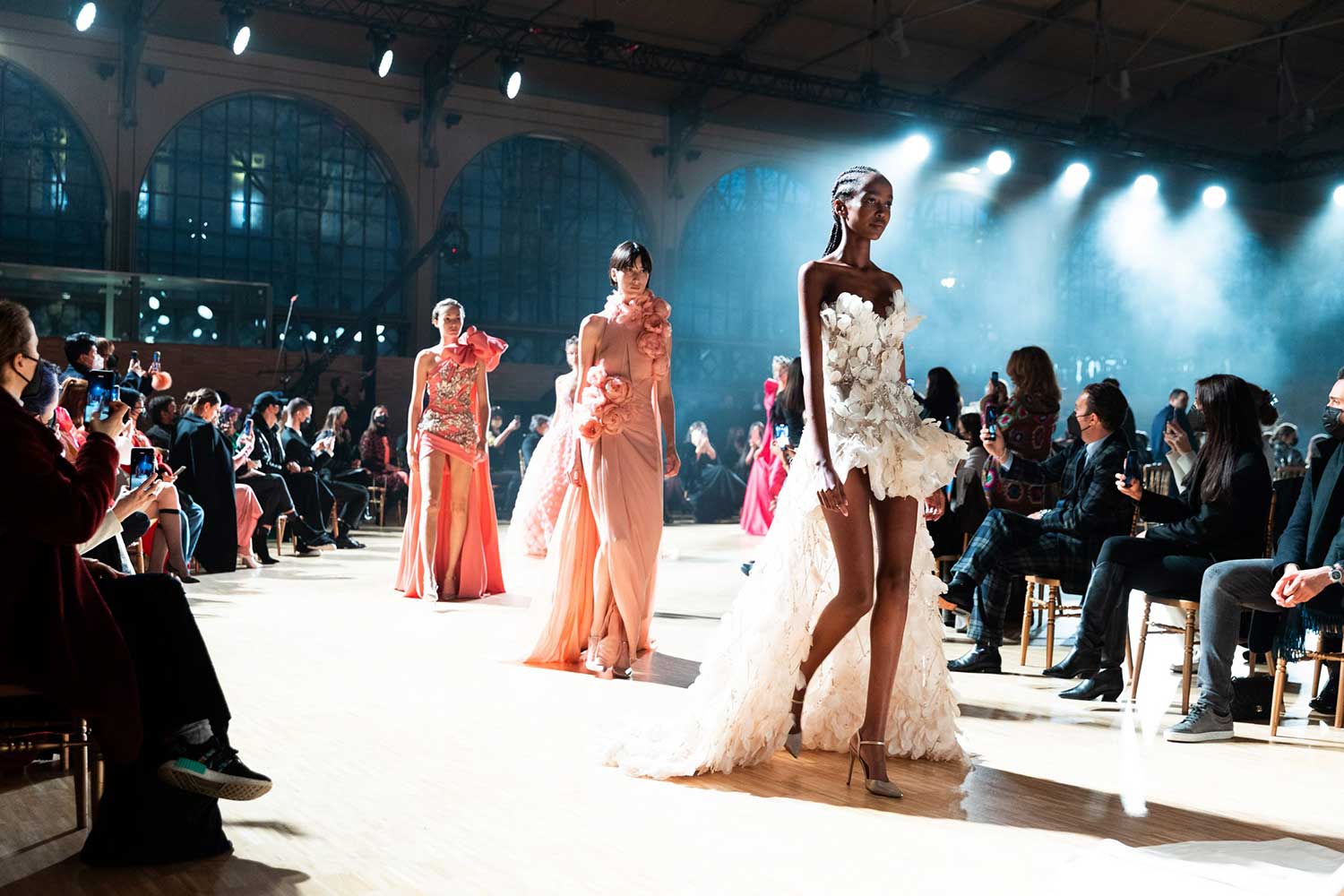
What Exhibiting at Fashion Week Means
To exhibit at fashion week is to put your product physically inside a live cultural event — a defined brand space positioned where thousands of guests circulate between runway shows. Guests browse, sample, try, film, and buy in the charged gaps of a show day, and your brand is part of the event they came for rather than an interruption to it.
That last distinction is the entire pitch. A booth at a convention center competes for attention against five hundred other booths and fluorescent lighting. An exhibitor space at fashion week borrows the event’s energy: the room is dressed, the crowd is dressed, and everyone is holding a camera. The same table, the same product, the same staff produce categorically different content and conversation depending on the room they’re in.
The Bureau produces fashion weeks in three global markets — New York, Paris, and Los Angeles — each running three show days with hundreds of designers per season and 12,000–15,000+ guests per event. Exhibiting is one of the four ways brands participate; the full menu (sponsorship, exhibiting, gifting, experiential) is mapped in the brand activation guide.
The Room You’re Setting Up In
Exhibiting anywhere is a bet on foot traffic — on who walks past, how they’re feeling, and what they do after they stop. Fashion week stacks all three variables in the exhibitor’s favor:
Who walks past: creators, stylists, editors, photographers, buyers, and style-driven consumers — a self-selected audience that paid attention to be in the room. This is not convention-center drift; it’s the exact demographic most consumer brands spend media budgets trying to reach.
How they’re feeling: like they’re somewhere worth documenting. Fashion week guests arrive dressed to be photographed and primed to discover — new designers, new products, new things to post. Discovery is the mode of the entire event, and exhibitors sit directly in its path.
What they do after they stop: publish. The defining behavior of a fashion week crowd is that it documents everything it touches. A guest who samples your product doesn’t just remember it — there’s a meaningful chance they post it, tag it, and carry it into a feed the event’s millions of digital impressions are made of.
What an Exhibitor Space Includes
Packages scale from a single-market table to a multi-city built environment, but the anatomy is consistent:
| Element | What It Means |
| Footprint | A defined space inside the venue — table, booth, lounge, or custom activation build, sized to the package |
| Placement | Position in guest circulation — entries, lounges, and bar-adjacent placements carry the heaviest traffic and are confirmed first |
| Operations | Load-in windows, power, and event-team coordination — the logistics layer handled with, not around, you |
| Event marketing | Larger packages add brand mentions across event channels and programming — reach before anyone walks past |
| The audience | The inclusion no standalone venue can offer: 12,000–15,000+ guests per event, already inside |
On cost: it depends on footprint, placement, and market count — a sampling table is a fraction of a built activation space, and one city costs less than three. The Bureau builds exhibitor packages per brand rather than publishing a rate card, so the honest answer to “what does it cost” is the application: describe your product and goals, and the team responds with options that fit.
Fashion Trade Show vs. Fashion Week Exhibiting
Most brands weighing an exhibit budget are comparing fashion week against a fashion trade show — MAGIC in Las Vegas, Coterie in New York, and their peers. They’re different instruments, and the honest comparison is about intent:
A trade show is a wholesale marketplace. Retail buyers walk aisles with order books; success is measured in accounts opened and units committed. If your business runs on wholesale doors, trade shows do that job well — nothing on this page argues otherwise.
Fashion week exhibiting is culture-facing. Your product sits inside a live event attended by tastemakers, press, creators, and consumers — people who create demand rather than fill purchase orders. Success is measured in content generated, press and creator relationships made, direct sales and sign-ups, and the brand-context halo of “we showed at fashion week.”
Many brands run both: trade shows to service the wholesale calendar, fashion week to build the demand that makes wholesale conversations easier. The full side-by-side — audiences, formats, economics, and when each wins — is in the fashion week vs. trade shows guide.
Which Brands Exhibit (It’s Broader Than You Think)
The exhibitor floor is not a room full of clothing racks. The categories that consistently perform:
Beauty, skincare & fragrance — sampling and touch-up stations are genuinely wanted at an event where everyone is about to be photographed. Jewelry & accessories — high consideration, high try-on, native to the room. Spirits & beverages — tastings inside a celebratory event imprint harder than any endcap. Wellness & lifestyle — the audience is the early-adopter demographic these brands chase. Tech & consumer products — a style-context demo reaches people a trade-show aisle never will. Emerging retail & DTC brands — a weekend of concentrated foot traffic that a standalone pop-up shop would spend months of rent chasing.
The test is not “do you make fashion.” It’s whether your product earns a second look from a style-driven, culture-forward crowd. If it does, there is a placement shape that fits it. (If what you actually want is runway placement for a collection, that’s a different funnel — the designer application.)
How to Apply & What Happens Next
Step 1 — Apply. The exhibit application takes a few minutes: what you make, which markets interest you, what you want out of the event. No deck, no agency, no minimum brand size.
Step 2 — Placement conversation. The partnerships team reviews every application and responds with what’s available in your category — footprints, placements, and single- vs. multi-market options, shaped to your goals rather than read off a rate card.
Step 3 — Confirm and plan. Once a placement is confirmed, the events team coordinates the operational layer — load-in, power, staffing access, and any activation elements — ahead of show weekend.
Timing matters more than most brands expect. Exhibitor space is physical inventory; the highest-traffic placements go first, and late applicants choose from what remains. Two to four months of lead time is comfortable. The season calendar: New York February 11–14, 2027 · Paris March 4–7, 2027 · Los Angeles March 2027.
Put Your Product on the Floor
New York · February 11–14 — Paris · March 4–7 — Los Angeles · March 2027. Tell the partnerships team what you make and which markets you want — they’ll respond with placements and package options that fit.
Apply to Exhibit