

10 Pop-Up Shop Ideas
That Work When the
Audience Shows Up
Paris · Oct 2–3
Los Angeles · Oct 16–18
The best pop up shop ideas share one trait: they’re built for an audience that’s already there. Ten formats that consistently work: the micro-boutique, personalization counter, drop counter, try-and-buy beauty bar, styling suite, tasting counter, archive rack, collab capsule, content-ready shop, and waitlist shop. The variable that decides whether any of them pays off isn’t the idea — it’s foot traffic. A standalone storefront makes you buy your audience; a vendor placement at fashion week supplies one: 12,000–15,000+ guests per event at The Bureau’s New York, Paris, and Los Angeles weeks. To become a vendor at fashion week, it starts with a short application.
The Only Pop-Up Variable That Actually Matters
Every list of pop up shop ideas skips the uncomfortable part: the idea is rarely why a pop-up fails. Traffic is. A beautiful concept in a storefront nobody walks past is a very expensive photo set.
Standalone pop-up retail asks you to fund three things at once: the space, the build-out, and the marketing required to make strangers show up. That third line quietly becomes the biggest one — especially in New York, where short-term retail in the neighborhoods worth popping up in commands a premium and the sidewalk owes you nothing.
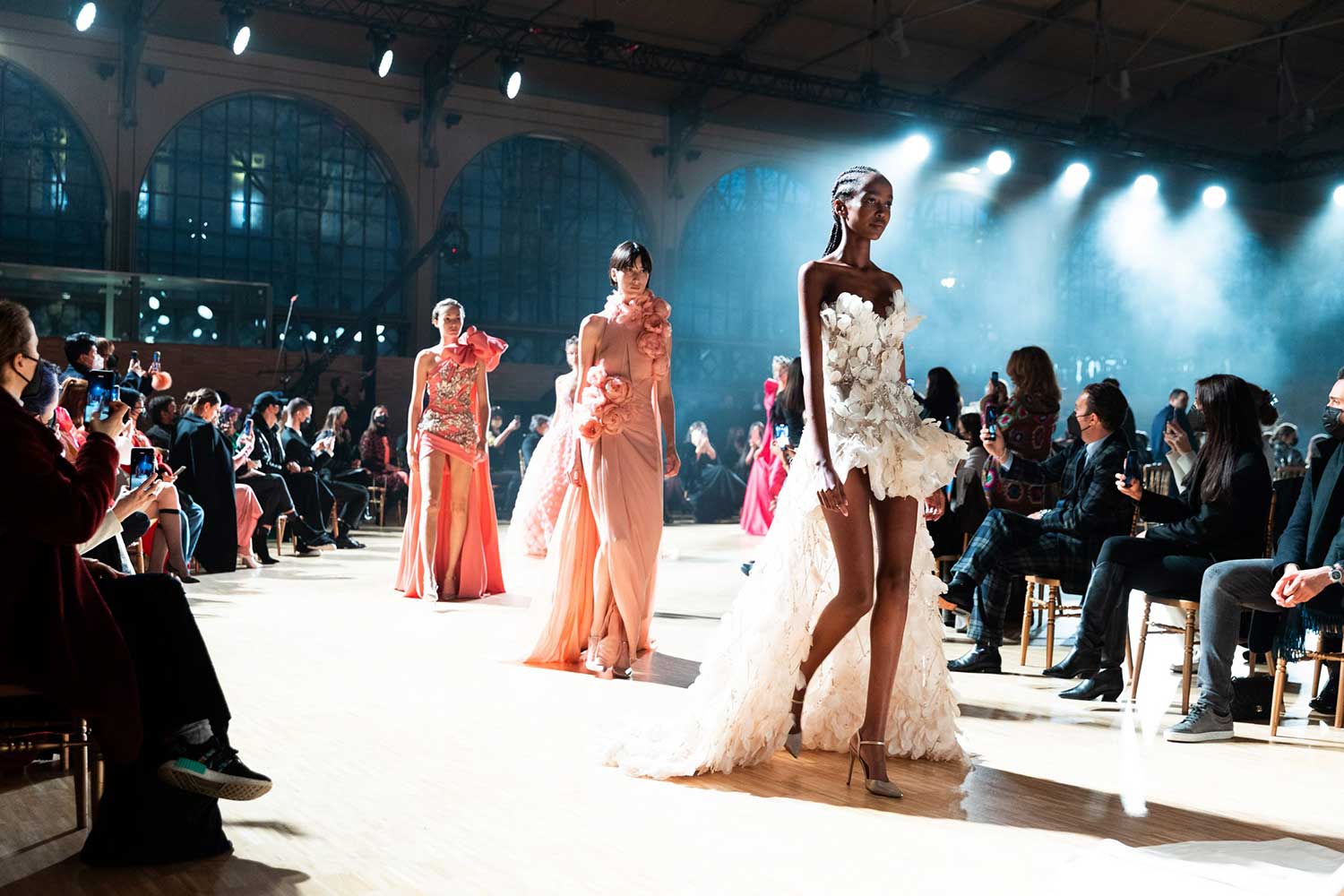
The alternative is running your pop-up inside an event that already has the crowd. Exhibiting at fashion week gives a vendor placement 12,000–15,000+ guests per event — consumers, creators, stylists, and press circulating between runway shows with time to browse and cameras out. The audience line item drops to zero; the budget goes into the shop itself. Every format below is written for that context, though most work anywhere the traffic is real.
Pop-Up Shop Ideas 1–5
1. The Micro-Boutique
A tight, fully merchandised shop-in-miniature — one rack, one table, one point of view. The discipline of a small footprint forces the edit most brands need anyway: your 12 best pieces, styled like a store window you can walk into. At an event, small reads as curated, not cramped.
2. The Personalization Counter
Monogramming, engraving, custom charms, on-site tailoring. Personalization converts browsers into buyers because the product becomes theirs before they’ve paid — and the wait creates a small crowd, which markets the counter better than any sign.
3. The Drop Counter
A limited run — a colorway, a collab, a numbered edition — available only at the event, only that weekend. Scarcity plus a deadline is the oldest retail engine there is, and “only at fashion week” framing gives the product a story that outlives the weekend.
4. The Try-and-Buy Beauty Bar
Testers become touch-ups, touch-ups become purchases. At an event where everyone is about to be photographed, a beauty pop-up isn’t selling product — it’s selling readiness. One of the highest-converting formats in the room, every season.
5. The Styling Suite
A stylist, a mirror, and your product line. Guests get styled into your pieces — then wear them through the event, photographed by everyone. Product placement where the placement walks the venue for six hours.
Pop-Up Shop Ideas 6–10
6. The Tasting Counter
For spirits, coffee, chocolate, fragrance — anything experienced through the senses. A signature pour or a scent flight staged as a moment, not a sample table. The context does the positioning: the same product tastes different at fashion week than at a grocery endcap.
7. The Archive Rack
Past-season pieces, one-offs, and samples sold as finds. Archive framing turns inventory into treasure hunting — and attracts exactly the fashion-literate crowd an event audience is full of. Low production lift, high conversation value.
8. The Collab Capsule
A small run made with a designer, artist, or creator — ideally one connected to the event. Two audiences discover the product at once, and the collaboration itself is the press release.
9. The Content-Ready Shop
A pop-up designed backward from the photos it should produce: a signature wall, deliberate lighting, one unmissable visual object. In a room full of creators, a shop built to be shot generates hundreds of posts — organic reach most standalone pop-ups budget five figures to imitate.
10. The Waitlist Shop
Nothing sold on site — instead, guests scan to join a waitlist, pre-order, or unlock an event-only offer later. The pop-up as list-builder. Pair it with any format above and the weekend keeps paying after load-out; a QR code costs nothing and captures everyone the register missed.
Pop-Up Shop NYC: The Math That Changes the Plan
New York is the pop-up capital and the hardest place to do the math. Short-term retail in SoHo, Nolita, or the Lower East Side commands premium rents for even a week — and the lease is the cheap part. Build-out, staffing, insurance, permits, and the paid media required to pull New Yorkers off their default route stack on top. The city gives you density; it does not give you attention.
Now run the alternative: a vendor placement at New York Fashion Week, September 11–13 at Gotham Hall. One fee, one weekend, and the foot traffic question is answered before you load in — thousands of guests per day who chose to be there, skewed toward exactly the early-adopter, high-publishing crowd a pop-up wants. Your shop sits inside a cultural moment instead of next to a bodega, and “as seen at NYFW” travels with the brand afterward.
The same logic runs in the other two markets — Paris, October 2–3 at Espace Cléry in the 2nd arrondissement, and Los Angeles, October 16–18 at The Lot Studios. If you’re still weighing an event placement against a trade-show booth, the fashion week vs trade show comparison settles which room fits your goal.
How to Become a Vendor at Fashion Week
The route in is deliberately short:
1. Apply. A brief application covering your brand, product category, and preferred market — New York, Paris, or Los Angeles. Minutes, not a pitch deck.
2. Talk fit and footprint. The partnerships team reviews category fit and walks you through open placements — counter, rack, micro-boutique footprint — and what each includes operationally.
3. Confirm and build. Placements are limited per category and confirmed first-come. Once yours is locked, you design the shop; the event supplies the room. Full details on footprints, operations, and what’s included are in the exhibitor guide.
Apply 2–4 months ahead of your target market for the best placement options. Brands considering a bigger swing than a shop — lounges, sampling programs, after-hours presence — should read the brand activation guide and the event sponsorship guide before deciding.
Run Your Pop-Up Where the Crowd Already Is
New York · September 11–13 — Paris · October 2–3 — Los Angeles · October 16–18. Pick a format, pick a market, and tell the team your category — placements are confirmed first-come.
Apply to Exhibit