

Fashion Week vs
Trade Show: Pick the
Right Room
Paris · Oct 2–3
Los Angeles · Oct 16–18
The difference between fashion week and a trade show comes down to who’s in the room and what you leave with. A fashion trade show (MAGIC, COTERIE) is a wholesale marketplace: trade-only attendance, booth rows, success measured in retail orders written. Exhibiting at fashion week puts your brand inside a cultural event — 12,000–15,000+ consumers, creators, press, and stylists per event — where success is measured in exposure, content, and direct audience relationships. Trade shows fill your order book; fashion week builds the demand that makes those orders sell through. Many brands do both — and the ones that do treat fashion week as the brand-building half of the equation.
Two Formats, Two Different Jobs
“Fashion week vs trade show” sounds like a rivalry. It isn’t — it’s a division of labor. A trade show is a sales channel. Fashion week is a demand channel. Confusing the two is how brands end up disappointed by both: expecting wholesale orders from a consumer event, or expecting viral content from a convention hall.
Traditional fashion trade shows — MAGIC in Las Vegas, COTERIE in New York — are excellent at the job they were built for. Retail buyers walk the floor with budgets and order sheets; brands that fit their assortments open accounts. It’s efficient, professional, and closed to the public. The output is distribution.
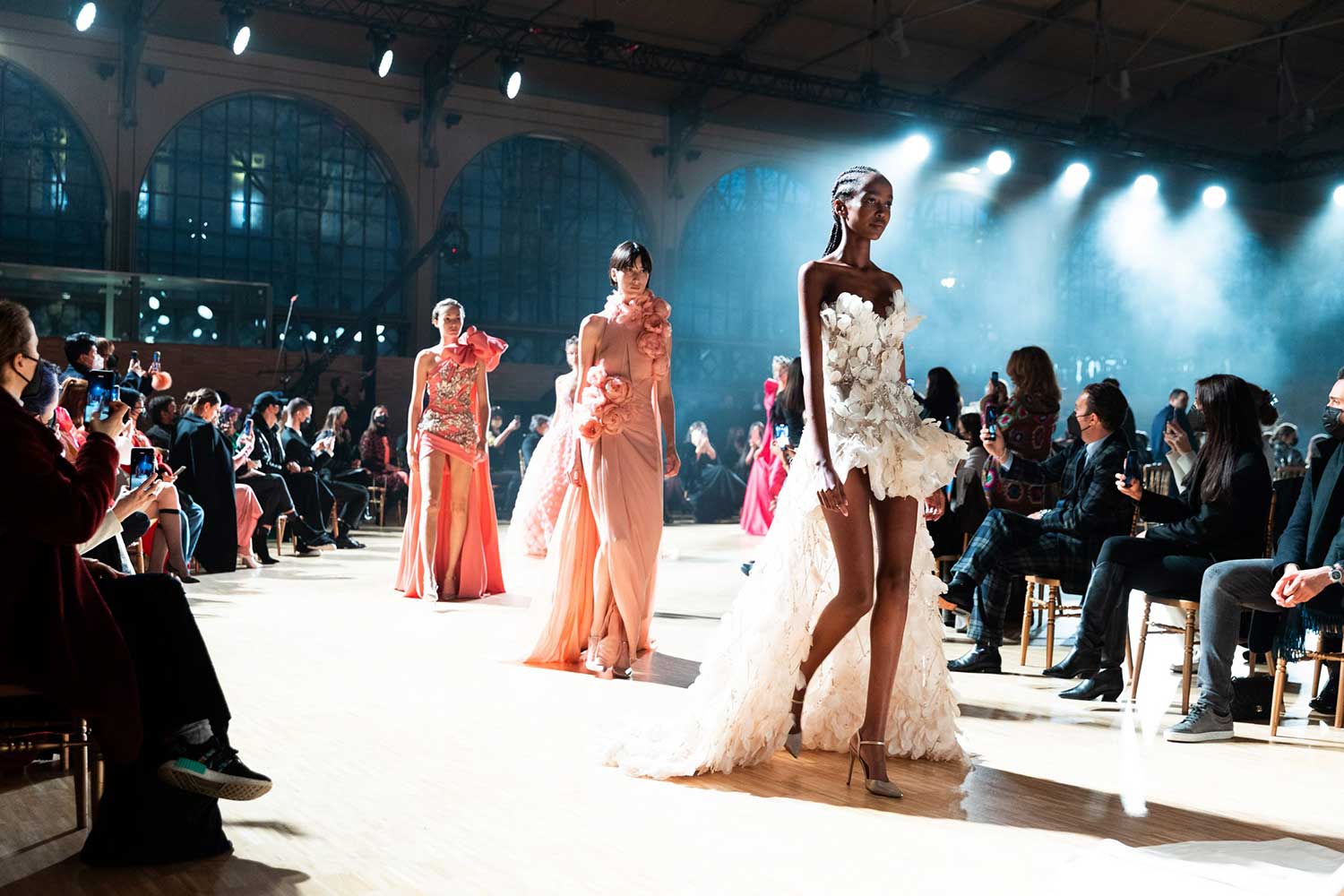
Exhibiting at fashion week is a different machine. The room holds consumers who buy, creators who publish, press who cover, and stylists who place product — 12,000–15,000+ of them per event across The Bureau’s New York, Paris, and Los Angeles weeks, plus millions of digital impressions as the room posts what it sees. The output is awareness, content, and relationships with the audience itself.
The comparison below is the one to run before committing budget to either.
Fashion Week vs Trade Show: The Comparison Table
| Factor | Fashion Trade Show | Fashion Week Exhibiting |
| Who’s in the room | Retail buyers, wholesale reps, trade press — trade-only entry | 12,000–15,000+ consumers, creators, stylists, press, and VIPs per event |
| Format | Booth rows on a convention floor; appointments and walk-bys | Curated exhibitor placements inside a runway event — guests circulate between shows |
| Success metric | Wholesale orders written; retail accounts opened | Brand exposure, content generated, direct sales and sign-ups, audience relationships |
| Content output | Minimal — trade floors aren’t built to be photographed | High — the audience publishes constantly; your space appears in guest content all weekend |
| Brand context | Adjacent to hundreds of competing booths in the same category | Adjacent to runway shows, designers, and a cultural moment — limited exhibitors per category |
| Timeline | Seasonal market weeks aligned to wholesale buying calendars | September (New York) and October (Paris, Los Angeles) — apply 2–4 months ahead |
| Best for | Brands whose priority is wholesale distribution and buyer meetings | Brands whose priority is consumer demand, content, press, and cultural positioning |
Read the last row twice. Neither column is “the winner” — the winner is whichever matches the job your brand needs done this season. If you need stores to carry you, go where the buyers are. If you need people to want you, go where the audience is.
Where Trade Shows Win
An honest comparison names the other side’s strengths. A fashion trade show is the right call when:
Wholesale is the business model. If your revenue runs through retail doors, nothing replaces a floor full of buyers with open-to-buy budgets. That’s the trade show’s home game.
You need volume meetings, fast. A well-worked trade show compresses a season of buyer outreach into three days of back-to-back appointments.
Your category is assortment-driven. Basics, denim, footwear programs — categories bought in ranges respond to the order-sheet format.
What a trade show can’t manufacture is consumer heat. Buyers themselves increasingly ask the same question before writing an order: does anyone want this brand? That’s the question fashion week answers.
Where Fashion Week Wins
The audience is the end customer. No intermediary deciding whether your product reaches people — the people are in the room, trying it, buying it, posting it. For DTC brands especially, this is the whole point.
The room publishes itself. A fashion week crowd is disproportionately creators, stylists, and press — people whose job is content. Your space appears in hundreds of guest posts without a single influencer contract. Trade floors, built for commerce rather than cameras, simply don’t produce this.
The context does positioning work. “As seen at fashion week” carries cultural weight that “booth 4,127” doesn’t. Your brand borrows the event’s energy — runway shows, designers, press walls — for the price of a placement.
Category scarcity. Convention floors hold hundreds of direct competitors. Fashion week exhibitor placements are curated and limited per category, so you’re a discovery, not a comparison shop.
For what a placement physically includes — footprints, operations, event marketing — see the full exhibitor guide. For the retail-style formats brands run inside their space, see pop-up shop ideas that work at fashion week.
The Brands That Do Both
The strongest wholesale brands increasingly run a two-room strategy: trade shows for the order book, fashion week for the demand that makes the order book grow.
The sequence compounds. A fashion week presence generates the content library, press mentions, and consumer signal that make a brand easier to buy at the next market week — buyers write bigger orders for brands with visible momentum. Then retail sell-through data from those doors becomes the proof point for the next season’s fashion week story. Each room feeds the other.
And if your brand isn’t wholesale at all — beauty, spirits, tech, DTC — the comparison resolves even faster: the trade show floor was never your room. The audience was. Brands weighing a broader presence than a single placement — lounges, sampling, after-hours — should also read the brand activation guide and the event sponsorship guide.
Exhibit Where the Audience Is
New York · September 11–13 — Paris · October 2–3 — Los Angeles · October 16–18. Tell the team your category and market and they’ll walk you through available placements. Confirmed first-come within each category.
Apply to Exhibit