

NYFW for
Influencers
& Creators
Gotham Hall, 1356 Broadway
Herald Square · Midtown Manhattan
You do not need a press pass to cover NYFW. At The Bureau’s shows, a public ticket is the access — anyone can attend, and shooting from your seat is part of the format at every tier. For content, Front Row VIP ($225–$720) buys the eye-level runway angle that makes footage look credentialed; listed add-ons like Backstage Atelier ($295) and the Editorial Feature ($395) / Editorial Spotlight ($695) tiers open content most attendees never get. Eleven shows across September 11–13 at Gotham Hall means a full week of posts from a single weekend on site. Here’s the plan.
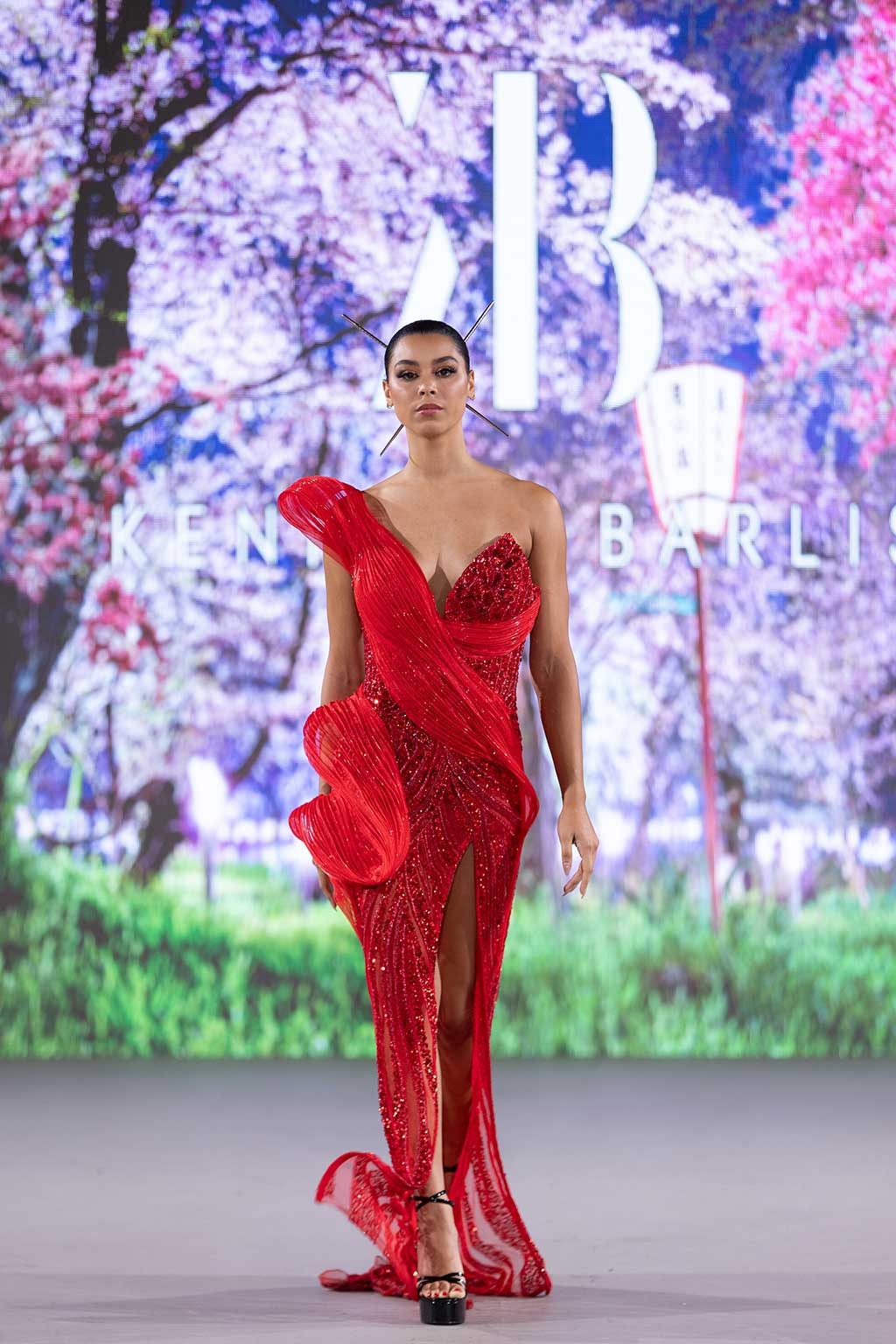
You Don’t Need a Press Pass. You Need a Ticket.
The single biggest misconception keeping creators away from fashion week: that covering NYFW requires credentials, a media kit, and six months of emailing PR agencies. That’s true for the invite-only brand shows across the city. It is not true at The Bureau’s NYFW, where tickets are open to the public and no industry credentials are required — you buy a seat the way you’d buy a seat to anything, and personal photography from that seat is welcome at every tier.
This matters more than it sounds. The historical gatekeeping of fashion week meant the only people who could produce runway content were the ones publications sent. The Bureau’s public-ticket model breaks that: an officially calendared NYFW producer — 11 shows, 100+ designers, a landmarked Beaux-Arts ballroom — where the room is open to anyone who books it. Roughly 40% of attendees are first-timers, and a growing share of the room is creators doing exactly what you’re planning.
One clarification for honesty’s sake: press, media, and influencers attending in a professional capacity can apply for credentials separately — a ticket and a credential are different things. But the practical takeaway is that you don’t have to wait on an application to cover this event. The ticket is the shortcut. (Background: who can attend NYFW.)
Buy the Angle, Not Just the Seat
For a regular guest, a ticket tier is a comfort decision. For a creator, it’s a camera position. Think of the price difference between tiers as the cost of the angle, and the decision gets simple.
| Front Row VIP $225–$720 | The content tier. Row 1, roughly three feet from the runway — unobstructed, eye-level, no heads in frame. This is the angle that makes footage look credentialed, plus champagne-in-hand front-row lifestyle shots you can’t fake from row five. |
| Reserved Seating from $130 | The value angle. Guaranteed seat, rows 2–7 — slightly elevated sightlines that read clean on camera, no arrival-time anxiety. The smart pick for a multi-show budget. |
| General Admission from $105 | The atmosphere tier. Open floor, best-available — arrive 30–45 early for position. GA footage is energy footage: the crowd, the room, the scene. Great for vlog-style coverage; harder for clean runway shots. |
| Day Passes GA from $345 | The volume play. Every show on one day — up to four rooms of content in one date. VIP day passes from $845 and Room 16 from $1,495 scale the same idea up. |
Then there are the listed add-ons, which are the closest thing to a content cheat code on the ticket page: Backstage Atelier ($295) — behind-the-scenes access, the hair-makeup-and-racks content that normally requires a credential; Editorial Feature ($395) and Editorial Spotlight ($695) — add-ons built around featured editorial coverage; and Runway to Reception ($350). These are listed add-ons at checkout — check the tickets page for current details and availability. For a creator whose entire product is access, $295 for backstage frames is the most obviously underpriced line on the menu.
Budget note: Afterpay splits any tier into 4 interest-free payments, and tickets are on sale now. Full tier anatomy in the ticket types guide and cost breakdown.
Plan Around the Schedule, Not Against It
Eleven shows across three days is a content calendar someone already built for you: Friday at 3:00, 6:00, and 8:30 PM; Saturday and Sunday at 12:00, 2:30, 5:30, and 8:30 PM — Sunday’s 8:30 being the Grand Finale. Each slot produces a different kind of footage, and the creators who come home with a full week of posts are the ones who treated the schedule as a shooting plan.
Daytime slots (12:00, 2:30, 3:00) are your daylight inventory: exteriors, arrival looks, street style, and natural-light detail shots. Friday’s 3 PM show is a quietly great content pick — a September late afternoon means you walk out of the show into the kind of warm, low-angle light that flatters outfit content, with the whole evening still ahead of you. Evening slots (5:30, 6:00) give you the transition: golden-hour exteriors going in, full night-time Broadway glow coming out. Night shows (8:30) are the drama: runway lighting at its moodiest, the dressiest crowds, and — on Friday — a direct line into The Rose Ball, the official after party, which is a second content set on the same night.
If you can only attend once, pick the slot that matches your feed: daylight creators go daytime, luxury-and-nightlife creators go 8:30. If you can attend two or three, split across slots — two shows in different light produce visibly more varied content than three shows in the same slot. And if you’re building the whole weekend, the weekend itinerary guide maps show-to-show logistics so your shooting plan survives contact with Midtown.
Walk In Knowing Every Frame You Need
The difference between creators who post one grainy runway clip and creators who fill a week: a shot list. Here’s the one to steal, in shooting order.
1. The Arrival
Your look, outside the venue, before doors. The Gotham Hall facade at 1356 Broadway is the establishing shot — grand columns, your outfit, Midtown moving behind you.
2. The Dome Reveal
Gotham Hall’s soaring domed ceiling and marble columns are the most-shot interior at this NYFW. Walk in, tilt up, film the reveal. It never misses.
3. The Runway
From your seat: individual looks you love, one full walk end-to-end, and the finale — every model returning in sequence. The finale walk is the best video moment of any show.
4. The Street Style
The sidewalk before and after shows — the crowd, the looks, the photographers working. Candids of the scene are fair game; ask before direct portraits.
5. The Details
Ticket-in-hand, champagne at Front Row, seat-number frames, outfit close-ups. The small proof-of-presence shots that stitch a vlog together.
6. The Rose Ball
Friday night’s official after party is a second aesthetic on the same date — party energy against runway polish. The Rose Ball returns with the February 2027 season; see the after party page.
Two craft notes. First, shoot the runway in bursts and hold your phone at chest-to-eye level — both because it’s the etiquette and because it’s a steadier frame (the full technique is in the photography tips guide). Second, shoot more B-roll than feels necessary: the walking shots, the subway exit at Herald Square, the queue, the light. When you cut the recap later, B-roll is always what runs out first.
Real-Time Proof, Delayed Polish
The weekend itself is a two-track publishing operation. Track one: real-time. During NYFW weekend, interest in fashion week content peaks — post Stories and short clips as they happen: the arrival look, the dome reveal, a single killer runway moment, the street-style scene. Real-time posting does one job: it proves you were in the room while everyone is looking at the room. It doesn’t need to be polished; it needs to be now.
Track two: the edit. Your best material — the full recap, the outfit breakdowns, the “what NYFW is actually like” explainer — benefits from a real edit, and the days immediately after the event are the window: you’re still associated with the moment, but you’ve had time to cut properly. A single weekend at 2–3 shows comfortably yields a week or more of daily posts if you shot the list above.
Between shows, resist the urge to edit on site. The turnaround between Saturday’s 12:00, 2:30, 5:30, and 8:30 slots is for shooting, eating, and charging — not for color-grading in a coffee shop while the street style you should be filming walks past the window. Log clips, favorite the keepers, post one Story per gap, and keep shooting. The edit happens Monday.
Phone-First Is Not a Compromise. It’s the Format.
Here’s the liberating truth about fashion week gear: the phone in your pocket is the right camera for this job. The show room has etiquette physics that rule out the alternatives — no flash ever, nothing held above chest-to-eye level, no tripods or ring lights or rigs blocking sightlines from a seat. A modern phone handles runway lighting well, fits the etiquette envelope perfectly, and is the camera you can also post from between shows. The pros at the end of the catwalk have the long-lens angle covered; your job is the angle only your seat has.
The kit that actually matters: a power bank (a full day of shooting and posting will bury a battery by mid-afternoon), storage headroom cleared before the weekend, and a small crossbody bag that holds both without fighting your outfit — which is itself content infrastructure; the what to wear guide covers dressing for the cameras pointed the other way. Outside the venue, gear rules relax — sidewalk street-style shooting with a real camera is fine; just don’t stage long shoots in the doorway crush. The full protocol is in the etiquette guide, and it’s worth reading: the creator who shoots politely gets invited back by the algorithm and the room.
Tagging is distribution. Tag The Bureau Fashion Week and set the location (Gotham Hall, New York) on everything — tagged content is how the producer finds and reshares guest coverage, and a reshare to the event’s own audience is the cheapest reach you’ll get all weekend. Tag the designers whose looks you feature, too: with 100+ designers on the calendar, many of them emerging, a well-shot clip of someone’s collection is exactly what they want to repost. Check the designer lineup before your shows so you know whose work you’re filming.
What a Fashion Week Weekend Is Actually Worth
Treat the ticket as a production budget and the math clarifies. A creator’s NYFW weekend produces three durable assets. First, the content library: a week-plus of posts from one weekend, in a category — fashion week — with reliable seasonal search and feed interest. Second, the portfolio proof: runway coverage is a credibility line for creators pitching fashion, beauty, and lifestyle brands; “I cover NYFW” changes how a pitch email reads, and now it’s simply true. Third, the relationships: a room with 100+ designers, working photographers, and other creators is a networking event with a runway attached — and Friday’s after party doubles the surface area.
Keep the monetization expectations honest: nobody should buy a ticket expecting brand deals to fall out of the ceiling, and this guide won’t pretend otherwise. What the weekend reliably delivers is inventory and legitimacy — the raw material that compounds if you’re consistent the other fifty-one weeks. Creators who cover an event well once tend to find the second season easier in every way: better-planned shots, existing relationships, and an audience that already associates them with the event.
If you’re weighing the spend, the is NYFW worth it guide runs the general-attendee version of this math, and the cost guide itemizes everything. For most creators the honest answer is: one Front Row VIP show plus disciplined shooting beats three GA shows shot casually — buy the angle, work the list, publish on both tracks. And if fashion week becomes a content pillar rather than a one-off, note that LA Fashion Week runs October 16–18, 2026 — five weeks after New York, a second runway weekend on the other coast. Those tickets aren’t released yet; the LAFW waitlist gets first access.
One more door worth knowing about: The Bureau runs a Fashion Week Creator Program for creators who want the house invested in their reach — accepted creators get paid distribution behind their content and earn 5–10% revenue share on every ticket sold through it, across New York, Paris, and Los Angeles.
The Room Is the Content
New York Fashion Week · September 11–13, 2026 · Gotham Hall. 11 runway shows, 100+ designers, and no press pass required — your ticket is the access. NYFW returns February 11–14, 2027 — tickets are on sale now.
Get Tickets — From $105