

What to
Expect
at NYFW
Gotham Hall, 1356 Broadway
Herald Square · Midtown Manhattan
Expect a two-to-three-hour experience with a clear rhythm: arrive at Gotham Hall 30–45 minutes early, check in with a mobile QR ticket, settle into a 1924 Beaux-Arts ballroom, and watch designers present collections look by look on the runway — single-designer shows run 20–35 minutes, multi-designer showcases 90–120. It’s loud, dramatic, and more welcoming than its reputation: roughly 40% of attendees are first-timers. The September 2026 season runs September 11–13 with 11 shows and 100+ designers; tickets from $105 during the September 2026 season.
Two to Three Hours, Start to Finish
Before the sensory details, get the skeleton. A NYFW show night at Gotham Hall follows a predictable arc, and knowing it in advance turns anxiety into anticipation:
| T−45 min | Arrive. The sidewalk scene on Broadway is already going — outfits, photographers, anticipation. Arrive 30–45 minutes before showtime. |
| T−30 min | Doors. Mobile QR ticket scanned at the entrance; you’re directed to your tier. |
| T−30 to 0 | The pre-show room — find your seat, take in the ballroom, watch the crowd assemble. This is half the experience. |
| Showtime | Lights drop, music rises. Single-designer segments run 20–35 minutes; multi-designer showcases run 90–120 minutes. |
| After | Slow exit, content capture, street style on Broadway. On Friday, The Rose Ball after party follows the evening shows. |
The September 2026 season stages 11 shows across 3 days — Friday at 3:00, 6:00, and 8:30 PM; Saturday and Sunday at 12:00, 2:30, 5:30, and 8:30 PM, with Sunday’s 8:30 closing the week as the Grand Finale. If you haven’t booked yet, the how to attend guide covers choosing your show; this page covers what it feels like once you have.
The Building Is the First Act
Gotham Hall announces itself before you’re inside. Built in 1924 as the Greenwich Savings Bank headquarters, it’s a landmarked Beaux-Arts monument at 1356 Broadway and West 36th Street — the kind of building banks constructed when they wanted to look eternal. Getting there is the easy part: Herald Square station (B/D/F/M/N/Q/R/W) is one block away, Penn Station about three blocks.
The sidewalk outside is its own event. Before every show, Broadway in front of the venue becomes an informal street-style runway — photographers working the crowd, guests in their most considered looks, the low buzz of a room assembling itself in public. Budget a few extra minutes for it, because you’ll want them; this is where a lot of the week’s most-shared images are made, and you’re dressed for it whether you planned to be or not.
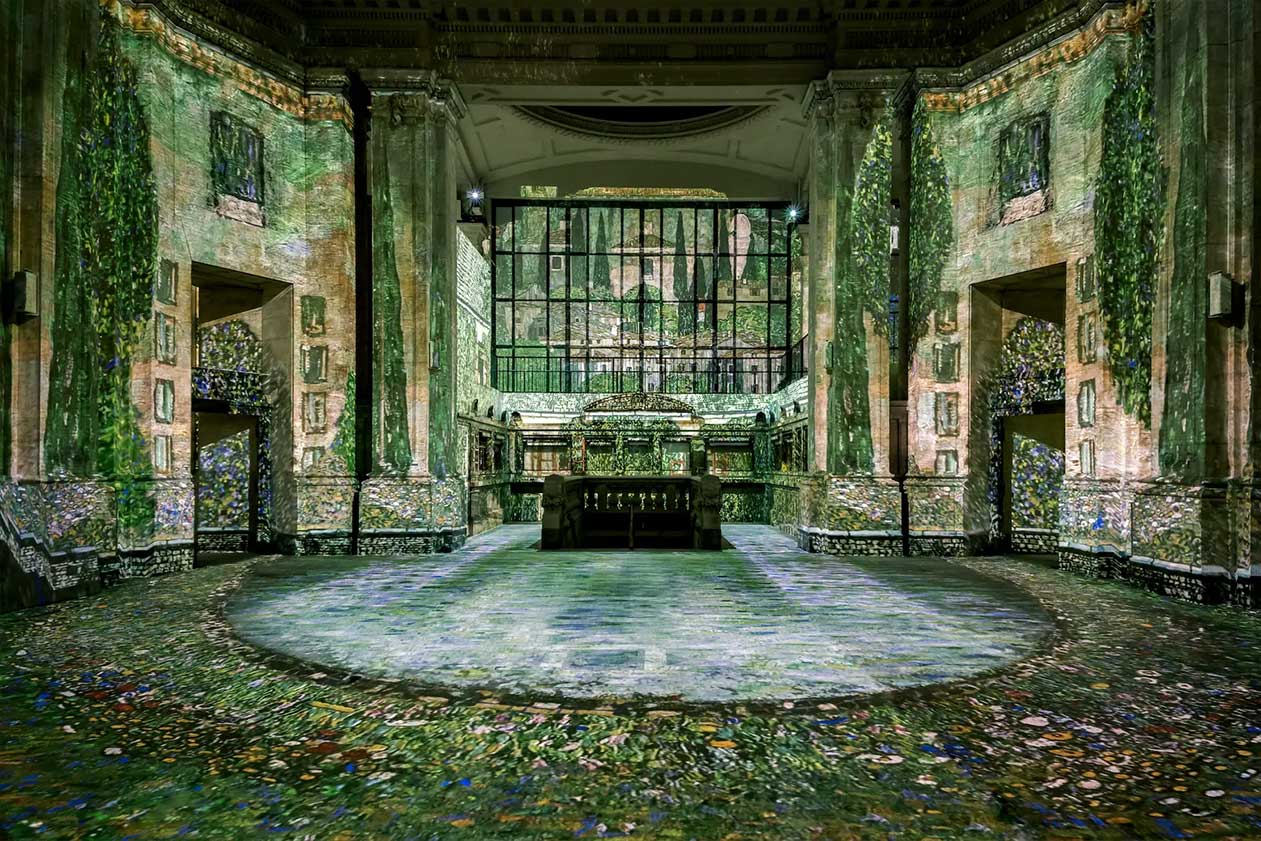
Then you walk in, and the reaction is nearly universal: you look up. The ballroom sits under a soaring domed ceiling ringed by marble columns, with roughly 1,500 capacity and a runway cutting through the middle of the floor. It reads like a gala staged inside a temple of finance — which is exactly what it is. For the building’s full story, see the Gotham Hall guide.
Thirty Minutes of Electricity Before a Single Look
Check-in is mercifully modern: staff scan the QR code on your phone at the door — no paper, no will-call — and direct you by tier. Front Row VIP guests head to row 1; Reserved guests to the reserved rows; General Admission is seated best-available within the GA section, which is the practical reason early arrival pays. Have your ticket downloaded and your battery charged before you leave the hotel; the door line moves fast when phones are ready.
What no ticket page can convey is the pre-show room. For thirty minutes, one of New York’s great interiors fills with several hundred people who all made an effort tonight. Editors cross-check seating. Creators shoot the dome. First-timers — four in ten of the room — do exactly what you’ll do: take it in, photograph the ceiling, and realize the intimidation they carried in has nowhere to land. The soundtrack builds. The runway sits empty and lit at the center of everything, a held breath.
Lights Drop. Music Rises. The Room Changes.
There’s a moment — every show has it — when the house lights cut and conversation dies mid-sentence. The runway blazes against a dark room. The first bars of the soundtrack hit at concert volume. And then the first model turns the corner, and whatever you thought a fashion show was gets replaced by the real thing.
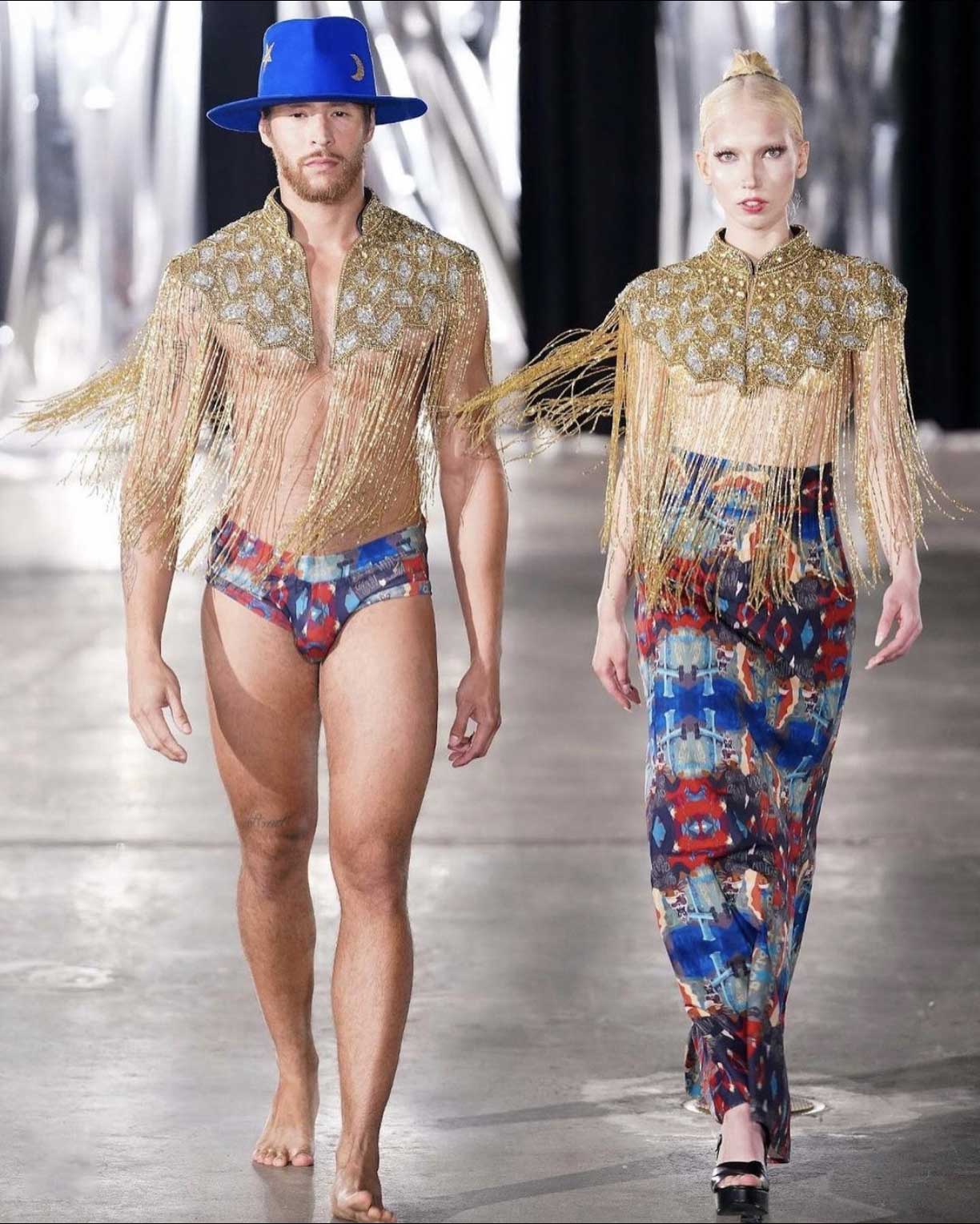
The mechanics: designers present their collections look by look down the central runway, photographers massed at the end of the catwalk shooting every exit. Lighting shifts with each designer’s segment — stark white for one collection, saturated color for another. Music does the pacing; it tells you when a segment is building and when a finale is coming. At the end of each designer’s segment, the designer walks — often the night’s loudest applause.
Duration depends on format. Single-designer shows run 20–35 minutes — tight, focused, one point of view. Multi-designer showcases run 90–120 minutes, with several designers presenting in sequence — a full evening of fashion in one seat. Both are real NYFW runway programs; the showcase format simply gives you more of the week per ticket.
And yes — photography from your seat is welcome at every tier. Half the room is shooting at any given moment. The single rule of runway photography etiquette: stay in your seat and out of the sightlines behind you. The photography tips guide covers how to get shots worth keeping.
Same Show, Different Distance
Every tier in the room watches the same designers under the same dome. What changes is proximity, certainty, and service — and it’s worth knowing honestly what each buys before you book.
| General Admission $105–$145 | Full show access, seated best-available within the GA section. You experience the complete program — the lights, the music, the looks. The classic first-timer entry point, and arriving early gets you the best of the section. |
| Reserved Seating $130–$225 | A guaranteed seat with clear sightlines. The variable-removal tier: your seat is guaranteed before you leave the hotel. |
| Front Row VIP $225–$720 | Row 1 and priority entry. Close enough to read fabric texture, catch a model’s expression, and hear heels strike the runway. This is the tier people describe as cinematic — and the seats the cameras find. |
| Passes | Day passes (GA from $345) cover every show on one day; full-event passes (from $3,695) cover all 11 shows. For people who want the week, not a night. |
The honest guidance: GA delivers the genuine article, and no first-timer leaves feeling shortchanged. Front row is a different register of the same experience — worth it for milestones, or the second visit after GA converts you. The ticket types guide makes the full comparison; the VIP page has the details on the top tiers.
The Night Doesn’t End When the Lights Come Up
Runway shows don’t empty like movie theaters. When the final walk ends and the house lights rise, the room exhales and lingers — people compare favorite looks, shoot the emptying runway, and drift toward the doors in no particular hurry. Outside, the Broadway sidewalk scene reignites: the street-style photographers are still working, and the post-show crowd in evening looks against Midtown at night is its own photo set.
Where the night goes next depends on your ticket and your ambition. Between shows, day-pass holders have a built-in intermission — the schedule’s 2.5–3-hour spacing leaves room for a real meal in Midtown before doing it all again. And on Friday, September 11, the official after party — The Rose Ball — follows the evening shows, carrying the night from runway to dance floor. (The Rose Ball returns with the February 2027 season; details on the after party page.)
Building a full weekend around your shows — hotels, meals, the between-hours — is its own craft; the weekend itinerary guide maps it out.
The Fine Print Your Senses Should Know
A last pass of honest, practical expectations — the things that surprise first-timers only because nobody said them out loud:
It’s loud. Runway soundtracks run at concert volume by design — the music is a structural part of the show, not background. If you’re sound-sensitive, discreet earplugs take the edge off without dulling the experience.
It’s dark, then blinding. The room goes near-black while the runway stays brilliantly lit. Dramatic lighting shifts between designer segments are part of the language. Your phone camera will struggle at first; the photography guide helps.
There is standing and there are lines. The entry line, the pre-show mingling, the exit crowd — expect to be on your feet a meaningful chunk of the night. This is the single best argument for shoes you can actually stand in, whatever the outfit is.
Shows start on schedule. Arrive 30–45 minutes early. Phone charged, ticket downloaded, dinner eaten — concessions are not the plan.
You will not feel out of place. Worth repeating one last time: roughly 40% of the room is there for the first time, there’s no enforced dress code, and 2,400+ guests have rated this 4.9/5. The gap between fashion week’s reputation and The Bureau’s actual room is the most pleasant surprise of the night. For the tactical version of all of this, read the 17 first-timer tips.
Now You Know What’s Coming. Go Feel It.
New York Fashion Week by The Bureau · September 11–13, 2026 · Gotham Hall. 11 runway shows, 100+ designers, under one 1924 dome. NYFW returns February 11–14, 2027 — tickets are on sale now — Afterpay available.
Get Tickets — From $105